A dent may appear purely cosmetic, but leaving distorted sheet metal untreated can create additional problems when the paint is already stressed. Dent damage problems are easier to manage when the panel is inspected before cracks, exposed metal, or corrosion develop.
Small dents may be suitable for paintless dent repair. Sharper damage usually requires more conventional bodywork.
Examine the Paint Before Moving the Metal
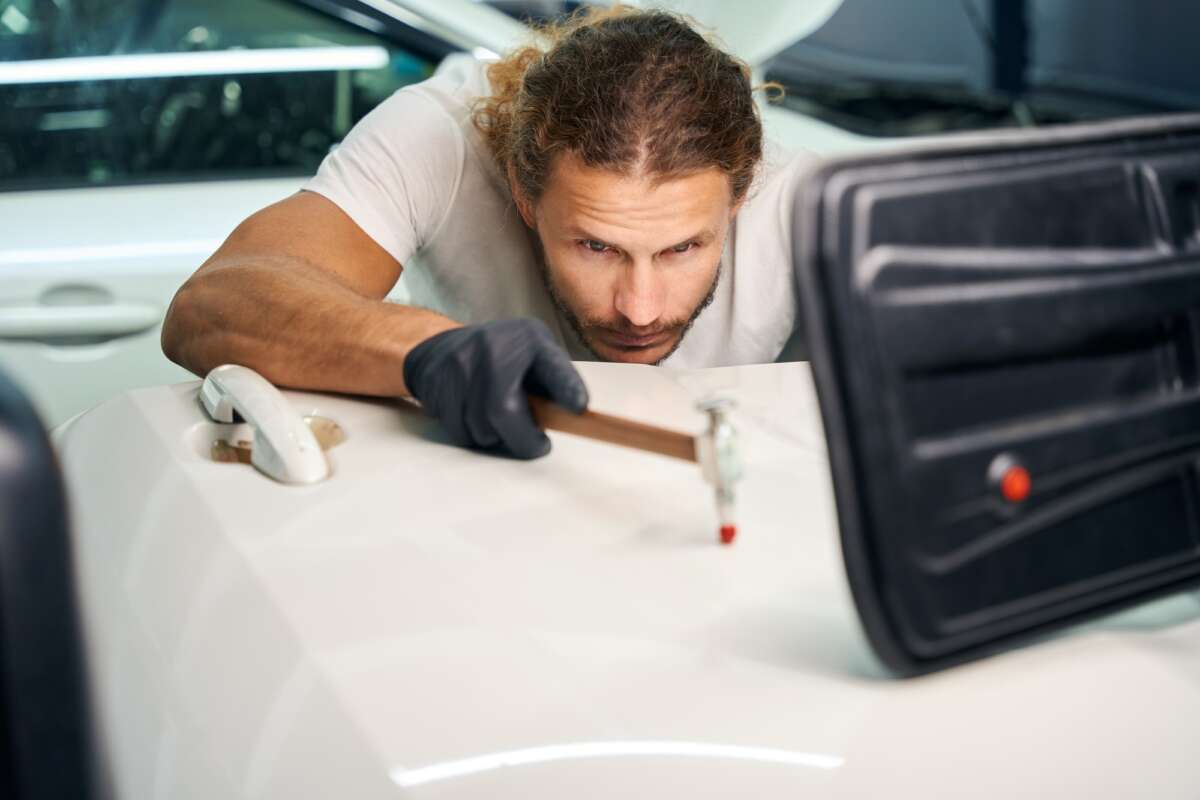
Look closely around the deepest part of the dent and along any crease. Fine paint fractures can be difficult to see until light hits the panel from an angle.
General car body maintenance topics can help owners understand exterior upkeep, but the specific shape and paint condition of a dent determine whether paintless repair remains possible.
Check Panel Edges and Body Lines
Dents near door edges, wheel openings, or strong body lines can be harder to reshape. Access behind the damaged area also affects repair options.
A shallow open dent in the middle of a door may be easier to correct than a small but sharply creased dent near an edge.
Understand Paintless Dent Repair
Paintless dent repair, often called PDR, reshapes metal without sanding and repainting the panel. Technicians may use specialized rods from behind the panel or controlled pulling methods from the exterior.
Drivers researching repair approaches through automotive directory resources should remember that PDR depends on the original paint remaining flexible and intact.
| Dent Pattern | Likely Repair Direction | Main Concern |
|---|---|---|
| Shallow round dent | PDR may work | Access behind panel |
| Sharp crease | More difficult PDR | Paint stress |
| Chipped dent | Body and paint repair | Exposed metal |
| Stretched panel | Conventional repair | Metal distortion |
Avoid Forcing the Dent Outward
Pushing hard from behind a dent can create high spots, stretch the metal, or crack paint that survived the original impact. Modern body panels are thinner and more complex than they may appear.
DIY suction tools sometimes improve broad, shallow dents, but they aren’t guaranteed to restore the original contour. They can also interfere with later repair if used aggressively.
Controlled movement is the goal. The metal needs to return gradually rather than being forced past its original shape.
Address Exposed Metal Quickly
Once paint has chipped or cracked, moisture can reach underlying metal. Cleaning and sealing the damaged area becomes more important, particularly in wet climates or places where road salt is used.
Broader automotive repair reading can introduce different ownership concerns, while a body specialist can determine whether a damaged panel needs refinishing after the metal is corrected.
A small exposed spot doesn’t mean the whole panel is ruined, but ignoring it gives corrosion more time to establish itself.
Why Waiting Can Make a Dent Harder to Ignore
Many dents remain mechanically harmless, yet deterioration around them can change the repair. A tiny paint fracture may spread as the panel flexes, gets washed, or experiences repeated temperature changes.
Another mistake is focusing only on appearance after a harder collision. Doors, hoods, and quarter panels also rely on correct alignment and mounting.
If gaps have changed or a door no longer closes normally, the problem deserves more than cosmetic attention.
Frequently Asked Questions
Can every dent be repaired without painting?
No. Paintless dent repair works best when paint remains intact and the metal hasn’t been excessively stretched. Sharp creases, damaged paint, severe distortion, and inaccessible areas may require conventional body repair.
Does pouring hot water on a dent work?
Hot-water methods are commonly discussed for some plastic bumper dents, but they aren’t a universal solution for metal body panels. Excessive heat can also affect paint or surrounding materials.
Can a small dent cause rust?
A dent itself doesn’t automatically cause rust. The risk increases when the impact cracks or removes paint and exposes steel to moisture, road salt, and contaminants.
Deal With the Dent Before Damage Expands
Inspect dents while they’re still small problems. If the paint is intact, ask whether paintless repair is appropriate. If cracks, chips, poor panel alignment, or exposed metal are present, address those issues promptly. Correcting the panel early can preserve more of the original finish and reduce the chance of corrosion complicating the repair.