
Table of Contents
ToggleA cold office can make professional dressing surprisingly difficult. Heavy layers may keep you warm but leave an outfit bulky, restrictive, or awkward once you move between rooms. Better cold office clothing relies on thin insulating layers, useful fabrics, and pieces that can be removed individually instead of one oversized garment doing all the work.
Build Warmth From Thin Layers First
The warmest-looking item isn’t always the most practical. A huge sweater may trap heat, but it can also bunch under a coat, crowd your desk chair, and make temperature changes difficult to manage.
Start closer to the body. A lightweight base layer beneath a shirt, blouse, or knit can add warmth without substantially changing the silhouette. Thin long-sleeve tops are especially useful when they stay hidden at the neckline and cuffs.
Exploring everyday fashion reading can provide styling inspiration, although warmth ultimately depends on fabric, layering, and how your workplace temperature changes throughout the day.
Choose Fabrics That Do More With Less Volume
Fine-gauge wool, merino blends, compact knits, and other lightweight insulating fabrics can provide warmth without the thickness of chunky sweaters. A thinner fabric also sits more smoothly beneath a blazer.
Cotton layers can feel comfortable, but multiple thick cotton garments may become bulky quickly. Mix fabric weights rather than stacking several similarly heavy pieces.
Keep the Outer Layer Structured
A cardigan is easy to remove, while a blazer can add polish and block some cold air around the torso. Either can work, but the shape should complement the clothing underneath rather than squeeze it.
Avoid forcing a fitted jacket over a heavy sweater. The shoulders may lift and the sleeves can become uncomfortable. Instead, pair structured jackets with fine knits and reserve heavier sweaters for days when you don’t need another close-fitting layer.
Professional outfit ideas can inspire combinations, but the best test is movement. Sit, reach, type, and put on your coat before deciding whether a layered outfit actually works.
| Layer | Useful Choice | Possible Problem |
|---|---|---|
| Base | Thin long-sleeve top | Visible neckline |
| Middle | Fine knit | Too tight over shirts |
| Outer | Cardigan or blazer | Restricted shoulders |
| Extra | Scarf or wrap | Excess fabric at desk |
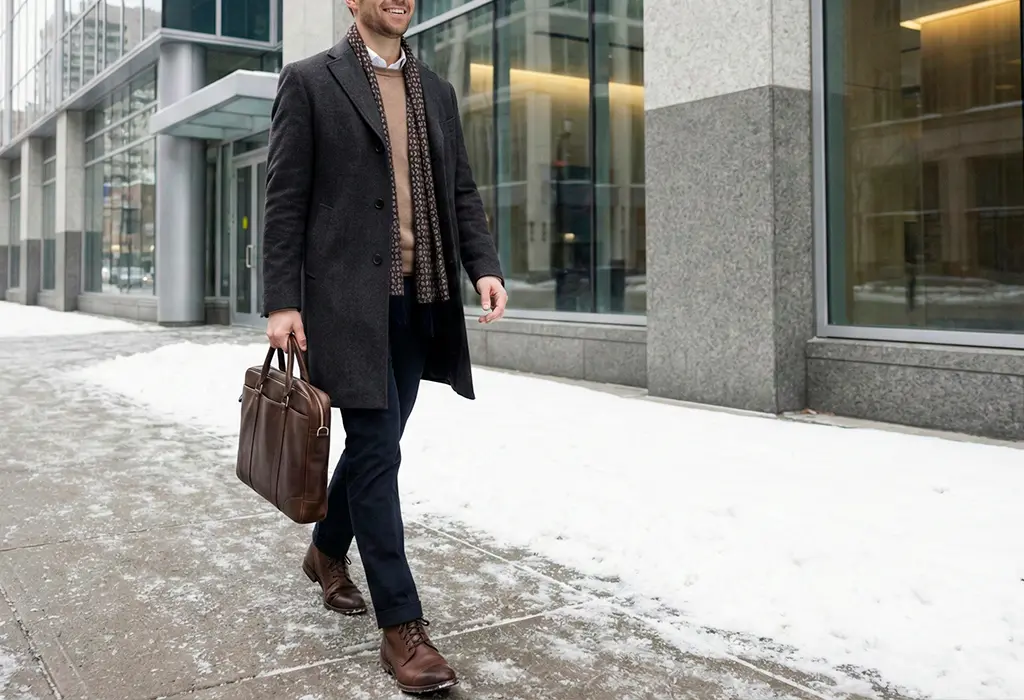
Accessories can add targeted warmth. A lightweight scarf, warm socks, or closed shoe may solve the problem without adding another full layer to your torso.
Balance Warmth With Office Appearance
Color coordination matters more once several layers are visible. Keeping two or three related colors can make the outfit look intentional rather than assembled entirely for survival.
You can also repeat a color between your shoes, belt, trousers, or outer layer. Small repetition gives multiple garments a visual connection.
Looking at seasonal styling references may spark new combinations, but you don’t need a separate winter work wardrobe. Often the better approach is adapting existing professional clothes with one or two warmer foundations.
Plan for Different Temperatures
Many offices aren’t cold everywhere. Meeting rooms, kitchens, sunny desks, hallways, and outdoor lunch breaks may feel completely different.
Wear layers that can come off independently. A base layer, normal work top, and cardigan gives you more control than a single extremely heavy sweater.
Common Layering Mistakes That Create Bulk
The most common mistake is stacking thick items that occupy the same space. A substantial shirt, chunky sweater, fitted blazer, and heavy coat can restrict the shoulders and make even a coordinated outfit look crowded.
Another issue is ignoring sleeve width. Wide sweater sleeves can bunch badly inside narrow jackets. Check how your layers physically interact instead of judging each garment separately on a hanger.
Frequently Asked Questions
What should I wear under office clothes for extra warmth?
A thin fitted long-sleeve base layer is often useful because it adds insulation without creating much bulk. Choose a neckline and sleeve length that remain hidden if you want the outfit to keep a traditional professional appearance.
Are sweaters professional enough for an office?
Many are. Fine knits, simple crewnecks, mock necks, cardigans, and cleanly finished sweaters can pair well with tailored trousers, skirts, or structured outer layers, depending on the workplace dress code.
How can I keep my feet warm at a cold desk?
Closed shoes, warmer socks, and footwear with enough room for your toes can help. Avoid squeezing thick socks into tight shoes, since the resulting pressure may make the footwear uncomfortable during a full workday.
Layer for Control Rather Than Maximum Thickness
Cold office dressing works best when every layer has a specific purpose. Use thin warmth close to the body, add a professional middle layer, and keep outer pieces roomy enough to move naturally. The goal isn’t to wear as much as possible. It’s to stay comfortable while preserving the clean shape of your normal work clothes.