

Where to Buy Authentic Tupelo Honey in Florida: A Local’s Guide

Tupelo honey is one of the rarest honeys in the world, and most of it comes from a single stretch of Florida wetlands. The white tupelo gum trees that produce it only bloom for two or three weeks each year, which makes the window for authentic harvests narrow and the market for imitations unusually large. If you live in Florida or are visiting the Panhandle, you have better access to real tupelo than almost anyone else in the country.

Authentic tupelo honey in Florida is best bought directly from family-owned apiaries in the Apalachicola River basin, at certified farmers’ markets across the Panhandle, and from speciality grocers that stock “Fresh From Florida” or Tupelo True certified jars.

Why Is Tupelo Honey So Hard to Find?

Tupelo honey is rare because the harvest window is brutally short and the geography is unforgiving. Authentic tupelo honey Florida is almost exclusively produced in the wetlands of the Apalachicola River basin, where beekeepers often have to reach their hives by boat and set up deep in swamp terrain. 

A single storm or a cold snap during the 2 to 3 week bloom can wipe out a full season, which is why genuine tupelo commands a premium and why blends flood the market when real supply runs thin.

Where to Buy Authentic Tupelo Honey in Florida?

The best place to buy tupelo honey depends on how close you are to the Panhandle, how much you want to spend, and whether you value the experience of meeting the people who keep the bees. Five options cover almost every buyer.

Direct From Family-Owned Apiaries

Buying straight from a Panhandle apiary is the most reliable way to get the real thing. Most operations are concentrated around Wewahitchka, Florida, a small town long considered the tupelo capital of the world. Smiley Honey, a family-run apiary based there since 1989, is one of the names locals point newcomers to when the question of authentic tupelo comes up.

Visiting an apiary in person lets you:

  • See the jars filled and labelled on site
  • Ask about the harvest year and hive location
  • Taste the honey before you buy

Many apiaries also ship direct, which helps if you cannot make the trip.

Panhandle Farmers Markets

Farmers’ markets across the Panhandle feature local beekeepers during and after the spring harvest. The best time to shop these markets is between April and July, when the season’s tupelo is fresh, and the vendor can usually tell you exactly where the hives were placed.

Strong markets to check include:

  • Apalachicola
  • Panama City
  • Tallahassee
  • Pensacola

Ask for the “Fresh From Florida” sticker or Tupelo True certification before handing over cash.

Florida Specialty Grocers

A handful of specialty grocers and gourmet food stores across the state carry certified tupelo from trusted Panhandle suppliers. These shops are useful when you cannot travel north but still want to avoid generic grocery-aisle blends. Look for stores that list the producer’s name on the jar and stock raw, unfiltered varieties.

The Tupelo Festival in Wewahitchka

The annual Tupelo Festival in Wewahitchka, held each May, is the closest thing Florida has to a dedicated celebration of the honey. Local beekeepers set up tasting stations where you can compare vintages, meet the families behind the hives, and buy jars straight from the source. If you are planning a visit specifically for tupelo, timing a trip around this festival is the single best move.

Online From Florida-Based Sellers

If you are not in Florida, or cannot make it to the Panhandle, ordering online from a Florida-based apiary is the next best option.

A trustworthy online seller will:

  • List the harvest location clearly
  • Disclose the year the honey was harvested
  • Carry Tupelo True or Fresh From Florida certifications

Avoid general marketplaces where “tupelo” can mean almost anything and where labels are often printed faster than the honey is harvested.

How to Tell if Tupelo Honey Is Real?

Spotting authentic tupelo honey Florida takes less than a minute once you know what to look for. A few quick checks will catch most blends and imitations before you pay.

  • Color: Light amber with a greenish tint when held to the light
  • Texture: Smooth, pourable, and still liquid even months after opening
  • Flavor: Buttery and floral with a hint of vanilla, not sharp or overly sweet
  • Certification: Look for Tupelo True, Fresh From Florida, or similar verified seals
  • Label: The best jars list the apiary, the region, and the harvest year

If a jar crystallizes within a few months, the honey is either not pure tupelo or has been blended with lower-cost varieties.

Questions to Ask Before You Buy

A good beekeeper will happily answer these. A seller who cannot, or who brushes the questions off, is a sign to walk away.

  • Where were the hives located during the tupelo bloom?
  • What year was the honey harvested?
  • Is the honey raw and unfiltered, or has it been heated?
  • Does the batch carry Tupelo True or Fresh From Florida certification?
  • Is this pure tupelo, or is it blended with other honey varieties?

Final Thoughts

Authentic tupelo honey is worth the effort it takes to find. The flavor is unlike any other honey on the market, and the work that goes into harvesting it from remote wetlands is part of what makes each jar special. Whether you buy it at a farmers market, directly from a Panhandle apiary, or online from a trusted Florida seller, the rules stay the same. Check the certifications, ask the questions, and favor sellers who can tell you exactly where the honey came from.

If you have been reading this far, you clearly care about what goes into your honey jar, and that alone puts you ahead of most buyers. For genuine tupelo honey Florida has to offer, order a jar straight from Smiley Honey. Every batch is Tupelo True certified, carries the Fresh From Florida label, and was named Best Tupelo Honey by NBC Select in 2025. 

Head to the website and pick your jar. Your next slice of toast will thank you! 

Linen Outfit Ideas for Breathable Summer Fashion

Summer style should never feel like a punishment. When the air gets heavy, sidewalks glare, and every errand feels warmer than expected, Linen Outfit Ideas give you a way to look pulled together without dressing like you are fighting the weather. The fabric has a relaxed confidence that suits American summers, from humid East Coast mornings to dry California afternoons. It wrinkles, yes, but that is part of its honesty. Linen does not pretend to be glossy or perfect. It looks best when it feels lived in, which is exactly why it works for daily dressing. A crisp linen shirt, wide-leg pants, or easy vest can shift from brunch to travel day to casual Friday without asking too much from you. For readers building a smarter warm-weather wardrobe, style resources like modern fashion visibility can help connect practical dressing ideas with a wider lifestyle audience. The real appeal sits in balance: breathable summer fashion that still looks intentional, not careless.

Linen Outfit Ideas That Work in Real American Summers

Summer dressing in the United States is not one climate problem. Miami heat feels different from Phoenix heat, and a breezy outfit that works in San Diego may feel too light for an over-air-conditioned office in Chicago. That is why Linen Outfit Ideas need to start with lifestyle, not fantasy. The best linen pieces solve a real problem: they keep air moving, soften with wear, and make simple outfits look considered without adding weight.

Why breathable summer fashion needs structure, not only softness

Soft linen can feel beautiful, but too much looseness can slide into pajama territory. The fix is structure. A boxy linen button-down, tailored shorts, or a clean vest gives the outfit a shape, so the fabric can relax without making the whole look collapse.

A white linen shirt over straight-leg denim shorts works because the shirt brings movement while the shorts hold the frame. In New York, that outfit can handle subway heat and rooftop drinks. In Austin, swap denim for linen-blend shorts and sandals, and the mood stays sharp without trapping heat.

Breathable summer fashion works best when one piece carries ease and another piece carries definition. A slouchy linen pant needs a fitted tank. A loose tunic needs a cleaner shoe. The outfit breathes, but it still has a point of view.

How to keep linen from looking too casual

Linen gets unfairly blamed for looking messy, but the real problem is usually styling. A rumpled linen shirt with old flip-flops may look accidental. The same shirt with leather slides, small hoops, and a tucked waistband looks relaxed on purpose.

Color also matters. Oatmeal, ivory, black, olive, and navy make linen feel more polished than beach-only shades. These tones work across American wardrobes because they pair well with basics most people already own, including denim, cotton tanks, white sneakers, and simple sandals.

The counterintuitive move is to stop fighting every wrinkle. Press the collar, cuffs, and front placket if needed, then let the body of the garment move naturally. Linen looks worse when it is overcontrolled. A little texture gives it life.

Building Summer Linen Outfits Around Your Day

The smartest wardrobe does not begin with a shopping list. It begins with your calendar. Summer linen outfits should support the way you spend your time, whether that means office hours, school drop-offs, weekend markets, airport terminals, or dinners outside where the chair is metal and the evening still feels warm.

Casual summer linen outfits for errands, brunch, and weekends

A linen button-down and pull-on shorts can become the backbone of an easy weekend uniform. Keep the shirt slightly oversized, roll the sleeves, and leave the bottom button undone for movement. Add flat sandals or low-profile sneakers, and the outfit feels casual without losing shape.

For brunch, linen pants outfit styling gets more interesting when you pair wide-leg pants with a ribbed tank and a woven belt. The belt matters because it breaks up the softness and gives your waist some definition. A small shoulder bag keeps the look cleaner than a bulky tote.

Summer linen outfits should not require a perfect body, a perfect tan, or a resort setting. They work because they forgive heat and movement. That makes them useful for real Saturdays, not only vacation photos.

Office-friendly linen clothing for women

Linen clothing for women can work at the office when the cuts are intentional. A linen blazer, shell top, and straight trousers can look professional without the stiffness of heavier suiting. The key is choosing pieces with enough weight to avoid transparency and enough tailoring to keep the look clean.

A beige linen blazer over a black column outfit feels strong in a business casual workplace. For creative offices, a sleeveless linen vest with matching trousers can feel modern without looking loud. Add closed-toe flats, a low bun, and simple jewelry, and the outfit holds up in meetings.

The warning is simple: avoid linen that is too sheer, too oversized, or too beach-coded for work. Linen can be relaxed, but your workplace still has a visual language. Dress for the room, then let the fabric make the heat easier.

Choosing Linen Pieces That Earn Closet Space

Buying linen is easy. Buying the right linen takes more judgment. A closet full of thin, see-through, shapeless pieces will not help you get dressed faster. The goal is to choose garments that can repeat often, pair widely, and still feel fresh after a long summer.

Linen pants outfit formulas that do not feel repetitive

A good linen pants outfit can carry more range than most people expect. Start with one pair of high-rise wide-leg linen pants in black, ivory, or tan. Wear them with a tucked tank for daytime, a linen vest for dinner, and a crisp shirt for travel.

Shoes change the whole message. Flat sandals make the pants feel beachy. White sneakers make them practical. Heeled mules make them dinner-ready. That flexibility is why linen pants deserve more respect than seasonal trend pieces.

The unexpected truth is that elastic waists are not the enemy. A flat-front elastic waistband can look polished if the fabric has enough drape and the top is styled cleanly. Comfort only looks sloppy when the rest of the outfit gives up.

What to check before buying linen clothing for women

Linen clothing for women should pass three tests before it comes home with you: opacity, recovery, and styling range. Hold the fabric to the light. Scrunch it in your hand. Picture it with at least three pieces you already own. If it fails any of those checks, leave it.

Blends can also be smart. Pure linen has the strongest natural texture, but linen-cotton or linen-viscose blends may wrinkle less and feel softer. For many American shoppers, especially those dressing for work or travel, a blend can be more useful than a purist fabric choice.

Fit deserves patience. Linen rarely looks great when it pulls across the hips, chest, or thighs. Size for movement, then tailor small details if needed. A hem adjustment can turn a forgettable pair of pants into the pair you reach for twice a week.

Styling Linen for Travel, Heat, and Everyday Confidence

Once you understand the fabric, linen becomes less precious. It can handle road trips, coffee runs, casual dinners, and vacation mornings. The trick is not to save it for special days. Wear it hard, wash it well, and let it become part of your summer rhythm.

Travel-ready breathable summer fashion

Travel exposes weak outfits fast. Airport seating, rental cars, hotel lobbies, and long walks all punish clothes that pinch, trap heat, or wrinkle badly in the wrong places. Breathable summer fashion matters most when you cannot easily change.

A linen shirt dress over bike shorts can be a strong travel choice because it gives coverage, airflow, and flexibility. Add a crossbody bag and sneakers, and you can move through the day without feeling underdressed. For beach towns, leave the dress open over a tank and shorts after arrival.

Layering still matters in summer because American travel often means cold airports and hot sidewalks in the same afternoon. A lightweight linen shirt works as a jacket without adding bulk. Tie it around your shoulders or waist when the heat rises, then put it back on indoors.

Color, accessories, and the confidence factor

Linen rewards a restrained color palette. Cream, sand, cocoa, faded blue, olive, black, and white mix well without much planning. Once your base colors cooperate, accessories can do the expressive work through earrings, sunglasses, sandals, or a textured bag.

A small styling mistake can make linen feel older than it is. Pairing loose linen with heavy jewelry, bulky bags, and tired shoes can drag the look down. Cleaner accessories bring the fabric forward and keep the outfit current.

Linen Outfit Ideas succeed when they make your day easier and your style clearer at the same time. Start with one piece you know you will wear, build two outfits around it, and let the fabric prove itself in real heat. The best summer wardrobe is not the one that looks perfect in a mirror; it is the one that still feels good at 4 p.m. when the day has tested it.

Frequently Asked Questions

What are the best linen outfit ideas for summer heat?

Choose loose but shaped pieces, such as linen button-downs, wide-leg pants, shirt dresses, and tailored shorts. Pair relaxed linen with cleaner basics so the outfit feels airy without looking unfinished. Light colors help, but fit and fabric weight matter more.

How do you style linen pants for casual summer outfits?

Wear linen pants with a fitted tank, tucked tee, cropped shirt, or sleeveless vest. Add sandals for a relaxed day look or sneakers for errands and travel. A belt, simple jewelry, and a structured bag keep the outfit from looking too soft.

Is linen clothing for women good for office wear?

Linen can work well for business casual offices when the pieces have structure. Choose linen blazers, straight trousers, shell tops, or midi skirts in neutral tones. Avoid sheer fabrics, beachy cuts, and overly wrinkled pieces when dressing for professional settings.

What colors look best in summer linen outfits?

Ivory, white, tan, black, olive, navy, soft blue, and cocoa work beautifully in linen. These shades mix easily with American wardrobe basics and make outfits feel calmer. Bright colors can work too, but neutrals usually give linen a cleaner finish.

How do you stop linen from looking wrinkled and messy?

Press collars, cuffs, waistbands, and plackets, then accept some natural texture through the body. Linen is meant to move and crease. Choosing thicker fabric, better cuts, and structured accessories keeps the outfit intentional even after hours of wear.

Can you wear linen outfits while traveling?

Linen works well for warm-weather travel because it breathes, layers easily, and feels comfortable during long days. Choose darker colors or blends if wrinkles bother you. A linen shirt, pull-on pants, or shirt dress can handle airports, sightseeing, and casual dinners.

What shoes go best with linen summer outfits?

Flat leather sandals, woven slides, white sneakers, espadrilles, and low mules all pair well with linen. The right shoe depends on the setting. Sneakers make linen practical, sandals make it relaxed, and mules help it feel ready for dinner.

Are linen blends better than pure linen?

Linen blends can be better for people who want softer fabric and fewer wrinkles. Pure linen has more texture and airflow, while blends often feel easier for work, travel, and everyday wear. The best choice depends on how polished you want the outfit to look.

Scarf Styling Ideas for Elegant Cold Weather Fashion

Cold air exposes weak outfits fast. A coat can look expensive on the hanger, boots can be polished, and the sweater can fit well, but the wrong scarf can still make the whole look feel unfinished. That is why Scarf Styling Ideas matter more than most people admit during American winters, especially in cities where you move from chilly sidewalks to heated offices, restaurants, rideshares, and weekend errands without changing your full outfit.

A scarf is not only a warmth piece. It controls the line around your face, adds texture near your coat, softens heavy layers, and gives practical outfits a sense of intention. In places like Chicago, Boston, Denver, New York, and Minneapolis, winter dressing often becomes a battle between comfort and style. The scarf is where those two sides can finally agree. For readers who follow fashion, lifestyle, and seasonal style resources such as modern fashion publishing platforms, the scarf keeps showing up for one simple reason: it solves cold-weather dressing without demanding a whole new wardrobe.

Scarf Styling Ideas That Start With the Coat

A scarf only looks elegant when it works with the coat, not against it. The coat sets the structure, weight, and mood of the outfit, while the scarf adds the finishing movement. When those pieces compete, you get bulk around the neck, strange color breaks, or a shape that makes even a good outfit look rushed.

Long Wool Scarves for Winter Coat Outfits

A long wool scarf works best with coats that have strong lines. Think tailored wool coats, belted wrap coats, single-breasted city coats, and clean overcoats that fall below the hip. The scarf should look like it belongs to the coat, not like something grabbed at the last second near the door.

The easiest mistake is wrapping a thick wool scarf too tightly. It creates a crowded neckline and shortens the visual line of the body. Let one side fall longer than the other or drape both ends evenly under an open coat. This keeps winter coat outfits warm without turning the upper body into a block.

A camel coat with a charcoal scarf is a strong example because the contrast feels calm instead of loud. A navy coat with a soft gray scarf gives the same effect for office commutes in Washington, D.C., or New York. The scarf adds depth, but the coat still leads the outfit.

Cashmere Scarf Looks With Tailored Outerwear

Cashmere scarf looks should feel quiet, not precious. The material already carries softness and polish, so the styling should stay relaxed. Fold it once, loop it loosely, and let the ends sit cleanly over the front of the coat.

A black tailored coat with an oatmeal cashmere scarf works because the scarf brightens the face without adding harsh contrast. A chocolate-brown coat with a cream scarf feels rich without looking dressed up for no reason. This is the kind of pairing that works for dinner, work, travel, and weekend errands.

Cold-weather dressing often gets treated like survival gear, but cashmere proves that warmth can still look composed. The key is restraint. Skip oversized knots with fine fabric and let the scarf’s texture do the work.

Choosing Color Without Making the Outfit Loud

Color is where many scarf outfits lose elegance. A scarf sits close to the face, so the shade affects the whole impression of the outfit. A bright color can look beautiful, but only when the rest of the look gives it room.

Neutral Scarf Outfits That Still Feel Intentional

Neutral scarf outfits do not have to look flat. The trick is mixing temperature and texture instead of stacking the same shade from head to toe. A cream scarf with a black coat feels sharper than another black accessory. A taupe scarf with a gray coat adds warmth without breaking the calm mood.

Texture matters more when color stays quiet. Ribbed wool, brushed alpaca, soft cashmere, and subtle fringe create interest without shouting. This is why a simple scarf can change the feel of winter coat outfits more than a bright handbag or patterned boot.

A strong American winter wardrobe often depends on repeatable pieces. Neutral scarf outfits make that easier because they work across errands, office days, airport travel, and casual dinners. You get more wear from fewer pieces, which is the real luxury during cold months.

Patterned Scarves for Clean Winter Layers

Patterned scarves need breathing room. Plaid, herringbone, windowpane checks, and soft stripes work best when the coat and sweater stay simple. The scarf becomes the only active visual element, which keeps the outfit balanced.

A plaid scarf over a plain navy coat looks classic in a way that still feels current. A striped scarf with a black puffer can make a practical outfit feel more styled without trying too hard. The pattern should connect to at least one color already in the outfit so the scarf feels chosen, not random.

The counterintuitive rule is simple: the bolder the scarf, the quieter the knot. Let the pattern hang, fold, or drape. Once a loud print becomes a bulky knot, elegance disappears fast.

Matching Scarf Shape to Real Winter Days

Style advice often forgets the weather has a say. A scarf that looks great in a mirror may fail on a windy platform, a snowy school run, or a long walk from a parking garage. Elegant cold-weather fashion respects the day you are actually having.

Oversized Scarves for Cold Commutes

Oversized scarves belong in serious winter wardrobes, but they need discipline. When the scarf has volume, the rest of the outfit should keep clean lines. Slim trousers, straight-leg jeans, structured coats, and sleek boots prevent the look from becoming swallowed by fabric.

For a cold commute in Chicago or Boston, wrap the scarf once around the neck and tuck the ends inside the coat. This keeps warmth close to the body and stops the scarf from flying around in wind. It also creates a neat neckline that looks more grown-up than a giant loose bundle.

Oversized pieces can look elegant when they seem intentional. Choose one generous scarf instead of stacking multiple bulky accessories. That single choice keeps the outfit warm, calm, and easier to move in.

Lightweight Scarves for Mild Winter Weather

Lightweight scarves deserve more credit in American winter dressing. Not every cold day demands heavy wool, especially in cities like Atlanta, Dallas, Los Angeles, or parts of the Pacific Northwest where mornings feel chilly but afternoons soften.

A thin wool, silk-blend, or cotton-cashmere scarf works well under trench coats, leather jackets, short wool coats, and quilted jackets. It adds polish without overheating the outfit. This is where scarf outfits become practical for transitional weather instead of only deep winter.

The best lightweight scarf styling is relaxed. Tie it once, tuck it into a coat opening, or let it sit under the collar. Overworking a thin scarf makes it look fussy, and fussiness rarely reads as elegant.

Making the Scarf Fit Your Personal Style

The scarf should not erase your style. It should sharpen it. A minimalist, a classic dresser, a streetwear fan, and someone who loves soft feminine layers can all wear scarves well, but they should not wear them the same way.

Elegant Winter Accessories for Minimalist Dressers

Minimalist dressing depends on proportion. A scarf in this kind of wardrobe should create a clean line, not decorative noise. Black, ivory, gray, camel, espresso, and navy usually work best because they support the outfit rather than interrupt it.

A slim black coat, straight jeans, ankle boots, and a gray scarf can look sharper than a more complicated outfit with louder pieces. Elegant winter accessories work because they refine what is already there. They do not need to announce themselves.

This is where quality becomes visible. A scarf with a soft hand, clean edges, and a good drape will always look better than a stiff scarf in a trendy color. Minimalism exposes every detail, so the scarf has to earn its place.

Soft Layering for Feminine Cold-Weather Style

Feminine scarf styling often works best when the scarf adds softness near stronger winter pieces. A belted coat, tall boots, leather gloves, and a brushed scarf create contrast without losing warmth. The outfit feels dressed, but still wearable.

Color can stay gentle here. Blush, cream, soft gray, muted berry, pale blue, and warm beige bring light to the face during gray winter months. These shades look especially good with wool coats, suede boots, and knit dresses.

Scarf Styling Ideas should always end with the person wearing the scarf, not the scarf itself. The best version makes your coat look better, your face look brighter, and your winter routine feel less like a compromise. Choose one scarf this week that works with your real coat, your real weather, and your real life, then build the outfit from there.

Frequently Asked Questions

What are the best scarf styling ideas for winter coats?

Start with the coat’s shape. Long wool scarves suit tailored coats, oversized scarves work with clean silhouettes, and fine cashmere pairs well with dressier outerwear. Keep the knot simple so the scarf supports the coat instead of overwhelming it.

How do you wear a scarf with a puffer jacket?

Choose a medium-weight scarf and keep it close to the neck. Tuck the ends inside the jacket or let one end fall cleanly in front. Avoid huge knots because puffers already add volume around the upper body.

What scarf colors look most elegant in winter?

Cream, camel, charcoal, gray, navy, black, taupe, and deep brown look polished with most winter coats. Muted berry, forest green, and soft blue also work when the rest of the outfit stays simple and balanced.

How can women style oversized scarves without looking bulky?

Pair oversized scarves with structured coats, slim jeans, straight trousers, or sleek boots. Wrap once and let the ends fall flat, or tuck them into the coat. The goal is warmth with shape, not fabric piled around the face.

Are cashmere scarves worth it for cold weather fashion?

Cashmere scarves are worth it when you want warmth without heavy bulk. They feel soft, sit neatly around the neck, and dress up simple coats fast. Choose a neutral shade first because it will work with more outfits.

What scarf style works best for office outfits?

A fine wool or cashmere scarf works best for office dressing. It looks neat over tailored coats and does not create awkward bulk indoors. Stick with calm colors like gray, camel, navy, cream, or black for the most polished effect.

How do you match a scarf with boots and bags?

Match the mood, not every color. A suede boot works well with a soft wool scarf, while a leather bag pairs nicely with a cleaner scarf texture. Repeating one color family is enough to make the outfit feel connected.

What is the easiest scarf look for everyday winter style?

Drape a long wool scarf over a simple coat and let both ends fall evenly. It works with jeans, trousers, boots, sneakers, and workwear. This easy shape keeps the outfit warm, clean, and ready for most winter days.

Hoodie Outfit Inspiration for Comfortable Urban Fashion

A hoodie can either look intentional or accidental, and the difference usually comes down to the pieces around it. Across American cities, from Chicago coffee runs to Los Angeles weekend errands, Hoodie Outfit Inspiration now lives far beyond gym wear. The best looks do not treat a hoodie like a backup plan. They give it shape, contrast, and a clear reason to belong. That matters because casual dressing has changed. People want comfort, but they still want to look sharp enough for brunch, airports, coworking spaces, campus days, and low-key nights out. A hoodie answers that need better than almost anything else, but only when it is styled with discipline. For brands, stylists, and fashion writers building smarter lifestyle content, strong digital visibility through platforms like modern fashion publishing support can help those style ideas reach readers who actually search for them. The goal is not to make a hoodie look formal. The goal is to make it look chosen.

Building a Hoodie Outfit Inspiration Wardrobe That Looks Intentional

A strong hoodie wardrobe starts before the outfit does. The hoodie itself decides whether the full look feels clean, sloppy, sporty, or city-ready. Many people in the USA own several hoodies, yet only one or two actually work outside the house. The difference is not always price. Fit, fabric weight, color, and structure matter more than a logo or trend label.

Choosing the Right Fit for Urban Hoodie Style

Fit decides the mood before anything else gets added. A cropped hoodie gives high-waisted jeans or wide-leg trousers a sharper line, while an oversized hoodie creates a relaxed streetwear shape. Neither is automatically better. The mistake is wearing a hoodie that looks accidentally stretched, too tight at the waist, or shapeless around the shoulders.

Urban hoodie style works best when the silhouette looks deliberate. If the hoodie is oversized, the pants need a clear shape, such as straight denim, cargo pants, or tailored wide-leg trousers. If the hoodie is slim, the lower half can carry more volume without swallowing the frame. Balance does the heavy lifting.

A real-world example is the weekend uniform many Americans reach for in New York or Seattle: a heavyweight gray hoodie, black straight-leg jeans, leather sneakers, and a structured coat. Nothing about it screams for attention, but every piece has a job. The hoodie softens the look, the jeans hold the line, and the coat gives the outfit a city edge.

Picking Colors That Feel Easy but Not Lazy

Color can make a hoodie feel mature fast. Black, gray, cream, navy, charcoal, forest green, and washed brown all work because they pair easily with denim, leather, wool, and canvas. Bright colors can work too, but they need restraint around them. A red hoodie with faded jeans and white sneakers feels casual and bold. A red hoodie with five other loud pieces feels confused.

Comfortable streetwear outfits often rely on quiet color control. One strong color, one neutral base, and one grounding piece are enough. That could mean an olive hoodie, black cargos, and off-white sneakers. It could also mean a cream hoodie, light-wash jeans, and a tan bomber.

The counterintuitive part is that basic colors often look more expensive than flashy ones. A plain charcoal hoodie in thick cotton can look better than a logo-heavy hoodie in a trendy color. The eye trusts simplicity when the fabric and fit are right.

Layering Hoodies Without Looking Bulky

Layering turns a hoodie from a casual item into a full outfit. This is where many looks fall apart because people pile on pieces without thinking about weight or length. A hoodie already has volume at the neck, arms, and torso. Every layer added over it must respect that structure.

Wearing Jackets Over Hoodies for Casual City Looks

The jacket-over-hoodie formula has become a staple for casual city looks because it solves two problems at once. It keeps the outfit relaxed while adding shape. Denim jackets, bomber jackets, leather jackets, chore coats, and wool overcoats all work, but each creates a different attitude.

A denim jacket over a hoodie feels easy and American, especially with canvas sneakers or boots. A bomber jacket gives the outfit a sportier mood that works well for concerts, casual dates, and weekend plans. A wool coat over a hoodie brings a sharper contrast, making the look feel grown without becoming stiff.

Length matters more than people think. A shorter jacket over a long hoodie can create awkward bunching unless the hoodie hem is meant to show. A longer coat usually handles hoodie volume better because it frames the body from shoulder to knee. That is why a camel coat over a black hoodie still works year after year.

Using Texture to Make Everyday Hoodie Fashion Feel Richer

Everyday hoodie fashion improves when the outfit mixes textures instead of stacking cotton on cotton. A fleece hoodie with denim has enough contrast. A cotton hoodie under a leather jacket feels stronger because smooth leather pushes against soft fabric. A hoodie with wool trousers feels modern because the pieces come from different style worlds.

Texture also helps monochrome outfits avoid flatness. A black hoodie with black jeans can look plain, but a black hoodie with coated denim, suede sneakers, or a nylon vest has more depth. The colors stay quiet while the surfaces create interest.

This is where American street style often gets it right without overthinking. Someone in Portland might wear a washed hoodie under a waxed canvas jacket with relaxed jeans and boots. The outfit feels practical, but it also has character. Clothes with texture look lived-in, not careless.

Styling Hoodies for Different American Settings

A hoodie does not need the same styling in every setting. What works for a college campus in Austin may feel too loose for a casual office in Boston. The smartest approach is to read the room, then adjust the surrounding pieces. The hoodie stays comfortable, but the outfit changes its language.

How to Dress Up a Hoodie for Work-Adjacent Plans

Some workplaces in the USA allow hoodies, especially in creative, tech, media, and hybrid office settings. That does not mean every hoodie belongs there. A clean, solid-color hoodie under a blazer or structured jacket can work when the rest of the outfit stays polished.

Dark denim, tailored trousers, loafers, minimal sneakers, and a neat coat can pull a hoodie into smarter territory. The hoodie should be free of stains, pilling, loud graphics, or sagging cuffs. This is not about pretending a hoodie is a dress shirt. It is about making casual comfort look controlled.

Hoodie Outfit Inspiration works especially well for work-adjacent plans like coffee meetings, coworking days, casual Fridays, and post-office dinners. A navy hoodie under a gray overcoat with black trousers feels relaxed but not careless. The outfit says you know the setting, even if you are not dressing traditionally.

Weekend Errands, Travel Days, and Off-Duty Comfort

Weekend hoodie styling should feel relaxed, but it still needs shape. Errand outfits often fail because every piece is soft, loose, and worn down. Comfort does not require surrender. A hoodie with straight-leg jeans, clean sneakers, and a crossbody bag already looks more finished than sweatpants and slides.

Travel days are another place where hoodies earn their place. Airports in the USA can swing from cold terminals to warm rideshares, so layering matters. A zip hoodie under a lightweight jacket gives temperature control without making the outfit look thrown together.

Off-duty comfort works best when one piece has structure. That could be a trench coat, a leather sneaker, a firm tote, or a pair of rigid jeans. The hoodie relaxes the outfit, but the structured piece keeps it from collapsing.

Making Hoodie Outfits Feel Personal Instead of Predictable

The hoodie is common, which means personal styling matters. Millions of people own the same basic piece, but the best outfits feel specific to the person wearing them. Details decide that. Accessories, footwear, proportions, and small contrasts keep the look from becoming another copy of a Pinterest board.

Footwear Choices That Change the Whole Mood

Shoes decide whether a hoodie outfit feels sporty, polished, rugged, or street-ready. White sneakers keep things clean and simple. Chunky sneakers push the look toward streetwear. Chelsea boots make the hoodie feel more adult. Work boots bring a tougher edge that pairs well with denim, canvas, and heavyweight cotton.

A hoodie with joggers and running shoes reads athletic. The same hoodie with straight jeans and boots reads intentional. That shift matters because the hoodie itself stays the same, yet the outfit tells a different story.

Sneakers still dominate comfortable streetwear outfits because they match the hoodie’s ease. The trick is keeping them clean enough to look chosen. Beat-up shoes can work with vintage styling, but dirty sneakers with a fresh hoodie often look careless rather than cool.

Accessories That Give Casual City Looks a Point of View

Accessories should sharpen the outfit, not decorate it into confusion. A beanie, baseball cap, chain, watch, tote, backpack, or crossbody bag can make a hoodie feel more personal. The key is choosing one or two details that match the outfit’s mood.

A black hoodie, black jeans, silver watch, and leather crossbody creates a sleek city look. A cream hoodie, faded denim, canvas tote, and retro sneakers feels softer and more laid-back. Both outfits use the hoodie as a base, but the accessories point them in different directions.

Personal style often shows up in the smallest decisions. Rolling a sleeve slightly, letting the hood sit clean over a jacket collar, matching socks to the hoodie tone, or choosing a cap that breaks up a plain outfit can change the feel. These details are quiet, but they make the outfit yours.

Conclusion

A hoodie earns its place in modern dressing because it understands how people actually live. Americans move between errands, work-adjacent plans, travel, school, coffee shops, and social nights without wanting to change five times a day. The right hoodie outfit respects that rhythm. It gives comfort without asking you to disappear into shapeless clothing.

The strongest Hoodie Outfit Inspiration comes from treating the hoodie as a real style piece, not a fallback. Choose better fabric, control the fit, layer with purpose, and let shoes or accessories set the final tone. That approach works because it does not fight the hoodie’s casual nature. It refines it.

Start with one hoodie you already own and build three outfits around it: one for errands, one for going out, and one for a sharper casual setting. Once you can style the same hoodie three ways, you stop wearing comfort by accident and start wearing it with intent.

Frequently Asked Questions

How do you style a hoodie outfit for everyday wear?

Pair a clean hoodie with straight-leg jeans, simple sneakers, and one structured piece like a denim jacket, coat, or firm tote. The outfit stays comfortable, but the added shape keeps it from looking lazy or unfinished.

What pants look best with urban hoodie style?

Straight jeans, cargo pants, wide-leg trousers, joggers with structure, and relaxed chinos all work well. The best choice depends on hoodie volume. Oversized hoodies need cleaner pants, while fitted hoodies can handle wider shapes.

Can a hoodie look stylish for casual city looks?

Yes, a hoodie can look stylish when the rest of the outfit feels intentional. Add a strong jacket, clean shoes, and balanced proportions. City style rewards ease, but it still needs direction.

What shoes should I wear with comfortable streetwear outfits?

Clean sneakers are the easiest choice, but boots, loafers, and retro trainers can also work. Shoes change the entire mood, so choose based on whether you want the outfit to feel sporty, polished, rugged, or relaxed.

How do women style oversized hoodies without looking sloppy?

Balance the volume with leggings, straight jeans, biker shorts, or wide-leg trousers that have a clear shape. Add earrings, a structured bag, or sleek sneakers so the hoodie feels styled instead of oversized by accident.

How do men wear hoodies in everyday hoodie fashion?

Men can pair hoodies with denim jackets, bombers, overcoats, cargos, jeans, or chinos. The cleanest looks usually avoid oversized pants and oversized hoodies together unless the outfit has strong footwear and clear proportions.

Are graphic hoodies good for urban hoodie style?

Graphic hoodies work when the rest of the outfit stays simple. Let the graphic be the main visual point, then pair it with neutral pants, clean sneakers, and minimal accessories so the look does not feel crowded.

What hoodie colors are easiest to style in the USA?

Black, gray, navy, cream, charcoal, olive, and brown are the easiest colors to style. They work across seasons, pair well with denim and outerwear, and fit most American casual settings without looking overdone.

Business Casual Style Tips for Modern Professionals

Your work clothes speak before you do, and people notice faster than most professionals admit. The wrong outfit can make a strong résumé feel slightly unfinished, while the right one gives your ideas a cleaner landing. Business casual style tips matter because American workplaces no longer follow one universal dress code, yet appearance still shapes trust, confidence, and first impressions. A marketing manager in Austin, a finance analyst in Chicago, and a tech consultant in Seattle may all hear “business casual,” but each office reads it differently.

That is where many professionals get stuck. They either dress too stiff and look disconnected from the room, or they dress too relaxed and lose authority before the meeting begins. The smarter path sits in the middle. It respects the workplace without surrendering personal taste. It lets you look capable on a Monday strategy call, comfortable during a long commute, and polished enough for the client lunch that appears without warning. For modern professionals, the goal is not perfection. The goal is control.

Business Casual Style Tips Start With Fit, Not Formality

Clothing becomes persuasive when it looks intentional. Many professionals chase the wrong problem by buying dressier pieces when the real issue is fit. A blazer that pulls at the shoulders, chinos that bunch at the ankle, or a blouse that gaps under office lighting can make expensive clothing look careless. In U.S. workplaces where hybrid schedules blur the line between home and office, fit is the quiet signal that says you still understand the room.

Why Proper Fit Makes Work Outfits Look More Expensive

A clean fit gives ordinary pieces more authority than flashy ones. A navy knit polo tucked into tapered trousers can look sharper than a full suit if the shoulder seam lands correctly and the pants fall cleanly over the shoe. That small detail changes the entire message. It says you planned, even if the outfit took five minutes.

Fit also protects you from the common business casual trap: looking dressed up but uncomfortable. You should be able to sit through a budget meeting, reach for a laptop bag, and walk across a parking lot without adjusting your clothes every few minutes. Clothes that fight your body steal attention from your work. That is a bad trade.

For men, this usually means avoiding shirts that billow at the waist and pants with too much break at the shoe. For women, it often means checking how jackets, trousers, skirts, and dresses move while seated, not only while standing in front of a mirror. The office is not a still photo. Your clothes need to work in motion.

Modern Professional Attire Depends on Proportion

Proportion decides whether an outfit feels current or stuck in another decade. Slim does not mean tight, and relaxed does not mean sloppy. The best modern professional attire usually has shape without strain. A straight-leg trouser, a clean sweater, and a structured jacket can do more for your presence than trend-heavy pieces that age fast.

American offices have also become more forgiving about softer shapes, especially in creative, education, healthcare administration, and tech-adjacent roles. Wide-leg trousers, refined sneakers, knit blazers, and soft button-down shirts can all belong in the room when the proportions stay balanced. The key is pairing ease with structure.

A good rule is simple: if one piece feels relaxed, another piece should bring discipline. Wear a softer cardigan with tailored pants. Pair polished loafers with dark denim where denim is accepted. Match a flowy blouse with a sharper jacket. The outfit should never look like every item gave up at the same time.

Building a Wardrobe That Works Monday Through Friday

After fit comes repeatability. A strong work wardrobe should not require a new decision every morning. The best office dress code strategy is building a small set of reliable pieces that can rotate across meetings, desk work, casual Fridays, and after-work plans. You do not need more clothes first. You need better cooperation between the clothes you already own.

Office Dress Code Strategy for Real American Workplaces

A useful office dress code strategy starts by reading the most respected people in your workplace, not the official handbook alone. Many U.S. companies write vague policies, then rely on culture to fill in the blanks. Watch what leaders wear on regular days, not only during presentations. That tells you where the real standard lives.

A law office in Boston may expect sharper shoes and structured layers, while a Denver design studio may accept clean sneakers and dark denim. A healthcare corporate office might lean practical but polished. A financial services workplace may still reward traditional tailoring. None of these standards is universal, and pretending they are universal creates awkward outfits.

The safest wardrobe base includes neutral trousers, clean button-downs, fine-gauge sweaters, structured jackets, polished flats or loafers, and one pair of dark, non-distressed jeans if your office allows denim. These pieces are not exciting on their own, and that is the point. They create a stable foundation so your personal details can stand out without making the whole outfit loud.

For content creators, consultants, recruiters, and business owners who move between office settings, digital presence matters too. A polished wardrobe pairs well with a polished public image, which is why many professionals also pay attention to online visibility through trusted brand-building resources such as digital PR support. Your clothing and public profile should tell the same story: clear, credible, and ready for the next room.

Workplace Outfit Ideas That Reduce Morning Stress

Workplace outfit ideas become easier when you stop treating each morning like a fresh puzzle. Build formulas instead. A formula might be trousers, knit top, jacket, and loafers. Another might be midi skirt, tucked blouse, belt, and low heel. For men, it could be chinos, oxford shirt, quarter-zip, and leather sneakers.

The formula does not make you boring. It gives you a framework. Once you trust the structure, you can change color, texture, and accessories without starting from zero. This is how stylish professionals appear consistent without wearing the same outfit every day.

Keep one “high-stakes” outfit ready at all times. This is the look you wear when your calendar suddenly gains a client meeting, interview, investor call, conference panel, or lunch with senior leadership. It should be comfortable, flattering, and already tested. The morning of an important meeting is the worst time to discover that your shoes squeak or your jacket wrinkles in the car.

Color, Texture, and Accessories Decide the Tone

A work outfit can be technically correct and still feel flat. Once fit and wardrobe structure are handled, the next layer is tone. Color, texture, and accessories tell people whether your style feels warm, sharp, creative, traditional, or confident. This is where modern professional attire gets interesting, because small choices can change the message without breaking the dress code.

How Neutral Colors Create Authority Without Looking Dull

Neutral colors work because they lower the noise around your face and ideas. Navy, charcoal, camel, cream, olive, black, brown, and soft gray all carry authority without demanding attention. They also mix well, which matters when you are building a wardrobe for American workweeks that include office days, remote days, travel, and events.

The mistake is wearing neutrals with no contrast. A full gray outfit can look tired if every piece has the same weight and finish. Add a crisp white shirt, a textured belt, a suede shoe, a silk scarf, or a ribbed knit to create depth. Texture is the secret that keeps neutral outfits from looking like uniforms.

Color still belongs at work. It simply needs a job. A burgundy sweater under a navy blazer feels grounded. A pale blue shirt softens a black trouser. A forest green dress with tan shoes can feel polished without shouting. Color should support your presence, not hijack it.

Stylish Work Clothes Need Restraint in the Details

Stylish work clothes rarely depend on dramatic accessories. In most offices, restraint reads as confidence. A good watch, clean belt, simple necklace, structured tote, leather laptop bag, or sharp pair of glasses can complete an outfit without making it feel staged. The details should look chosen, not collected.

Shoes carry more weight than people expect. Scuffed heels, worn-out soles, or dirty sneakers can weaken an otherwise strong look. In many business casual offices, polished loafers, ankle boots, ballet flats, low block heels, brogues, and minimal leather sneakers can all work. Condition matters more than category.

Accessories should also match your work rhythm. A person who commutes by train in New York needs different choices than someone driving to an office park in Phoenix. Heavy heels may look great at 8 a.m. and feel foolish by 4 p.m. A giant tote may carry everything but destroy the line of a tailored outfit. Style has to survive the day, not only the mirror.

Dressing for Hybrid Work, Travel, and Career Growth

The modern office is no longer one place. You may work from home on Tuesday, visit headquarters on Wednesday, join a Zoom call with executives on Thursday, and attend a networking event by Friday evening. That shift makes clothing more strategic, not less. The best professional wardrobe now helps you move between settings without looking like you changed identities.

What To Wear for Hybrid Meetings and Video Calls

Hybrid work made the top half of an outfit more visible and the full outfit more vulnerable. On video, collars, necklines, textures, and colors near the face matter most. A washed-out sweatshirt can make you look tired before you speak. A structured knit, clean blouse, sharp polo, or casual blazer can lift your presence with almost no effort.

The bottom half still matters because confidence is physical. You sit differently when you know the whole outfit works. That does not mean wearing hard dress pants at home all day. It means choosing comfortable trousers, dark jeans, or knit pants that would not embarrass you if you had to stand up unexpectedly.

Lighting changes everything. White shirts can glare on camera, tiny patterns can flicker, and black can flatten your shape in dim rooms. Mid-tone colors often work best for calls: blue, olive, camel, burgundy, soft gray, and warm brown. The camera is not kind, but it is predictable.

Career Growth Often Rewards Visual Readiness

Promotion does not come from clothing alone, and anyone who says otherwise is selling fantasy. Still, visual readiness can remove friction. When leaders imagine you presenting to clients, managing a team, or representing the company at an event, your appearance becomes part of that mental picture. Fair or not, it happens.

This does not mean dressing like the boss before you have the role. That can look forced. It means making small upgrades before they are required: better shoes, cleaner layers, sharper grooming, improved fabric quality, and outfits that look steady under pressure. The shift should feel natural, not theatrical.

Business Casual Style Tips work best when they help you look like yourself on a strong day. That is the real standard. Not overdressed, not underprepared, not trapped inside someone else’s idea of professionalism. Choose one outfit this week that already feels close, improve one detail, and let your work meet a version of you that looks ready before the first word is spoken.

Frequently Asked Questions

What are the best business casual outfits for modern professionals?

Clean trousers, button-down shirts, knit tops, blazers, loafers, ankle boots, and polished flats make strong options. The best outfit depends on your office culture, but the safest choice balances structure with comfort. Avoid anything wrinkled, distressed, tight, or too relaxed for meetings.

How can women dress business casual without looking too formal?

Soft blouses, tailored trousers, midi skirts, knit dresses, cardigans, and relaxed blazers work well. The goal is polish without stiffness. Low heels, loafers, flats, and simple jewelry help the outfit feel professional while keeping it comfortable for a full workday.

How can men dress business casual without wearing a suit?

Chinos, dress trousers, oxford shirts, polos, fine sweaters, sport coats, loafers, and clean leather sneakers can replace a full suit. Focus on fit and fabric quality. A sharp shirt and well-fitted pants often look more current than an outdated suit.

Are jeans acceptable for a business casual office dress code?

Dark, clean, non-distressed jeans can work in many U.S. offices, especially on casual Fridays or in creative and tech settings. Pair them with structured pieces, such as a blazer, tucked shirt, or polished shoes. Faded, ripped, or baggy jeans usually weaken the look.

What shoes work best with stylish work clothes?

Loafers, brogues, ankle boots, ballet flats, low block heels, and minimal leather sneakers fit many business casual offices. Shoes should look clean and intentional. Even casual footwear can look professional when the shape is simple and the condition is excellent.

How many pieces do I need for a business casual wardrobe?

A strong starter wardrobe can work with 12 to 18 well-chosen pieces. Focus on trousers, tops, layers, shoes, and one or two polished jackets. Choose colors that mix easily so each item creates several outfits instead of one isolated look.

What colors look most professional in modern professional attire?

Navy, charcoal, black, camel, cream, olive, brown, and gray look polished across many workplaces. Softer accent colors like burgundy, blue, forest green, and muted rose can add personality. Keep brighter shades controlled so they support the outfit rather than dominate it.

How do I make workplace outfit ideas feel less repetitive?

Create outfit formulas, then change one detail at a time. Rotate shoes, belts, layers, textures, or accent colors while keeping the basic structure consistent. Repetition becomes style when the fit is strong and each outfit looks intentional.

Women’s Wardrobe Basics for Timeless Daily Style

A closet can look packed and still leave you with nothing that feels right at 7:30 on a Tuesday morning. That is the quiet frustration many American women know too well: plenty of clothes, not enough clarity. Women’s wardrobe basics solve that problem by giving your daily style a steady base instead of a pile of random choices. The goal is not to dress plainly or erase personality. The goal is to own pieces that can carry school drop-offs, office hours, coffee runs, date nights, weekend errands, and last-minute plans without demanding a full outfit crisis.

A strong closet also changes how you shop. You stop chasing every sale rack and start asking whether a piece earns its space. That shift matters, especially when style advice moves faster than most real lives do. A smart wardrobe gives you breathing room, and thoughtful style visibility for modern brands shows how much personal presentation still shapes first impressions in everyday American life. Clothes may not do the whole job, but they set the tone before you speak.

Women’s wardrobe basics that make daily dressing easier

The best closet is not the biggest one. It is the one where every piece has a job, every color has somewhere to go, and every outfit starts with confidence instead of confusion. This is where timeless daily style becomes less about fashion theory and more about how you move through a normal week in real clothes.

Closet essentials that earn their space

A white button-down, a fitted tee, straight-leg jeans, black trousers, a neutral cardigan, and a simple blazer may sound familiar for a reason. These closet essentials keep showing up because they work across age, body type, season, and setting. A woman in Chicago may wear them under a wool coat in February, while someone in Austin may pair the same pieces with flats and rolled sleeves in October.

The trick is fit, not quantity. One crisp shirt that sits well at the shoulder beats five shirts that pull, gape, or wrinkle after an hour. A pair of jeans that works with sneakers, loafers, and ankle boots does more for your closet than three trendy cuts that only match one mood.

Closet essentials should also match your real calendar. A woman who works from home does not need five formal blazers, but she may need polished knits, clean denim, and a jacket that makes video calls look intentional. A strong wardrobe starts when your clothes stop pretending you live someone else’s life.

Everyday outfits that look planned without trying too hard

Good everyday outfits depend on repeatable formulas. A striped tee with dark jeans and loafers. A knit top with wide-leg pants and a belt. A black dress with a denim jacket on Saturday, then the same dress with a blazer on Monday. Repetition is not boring when the result looks right.

Many women resist outfit formulas because they worry they will feel predictable. The opposite often happens. Once you know which shapes, colors, and layers work, you gain more room for small style choices like earrings, lipstick, scarves, shoes, or a bag with texture.

The smartest everyday outfits also leave space for movement. American daily life is rarely one clean event. You may start at work, stop at Target, pick up dinner, and meet a friend before heading home. Clothes that survive that chain without losing their shape deserve loyalty.

Building a closet around fit, fabric, and function

Once the core pieces are in place, the next step is sharper judgment. A closet becomes stronger when you stop asking, “Is this cute?” and start asking, “Will I wear this well, often, and with ease?” That question cuts through impulse shopping fast.

Classic women’s fashion starts with fit

Classic women’s fashion is often mistaken for a narrow set of items, but the real secret is proportion. A blazer can look expensive or awkward depending on where the shoulder seam sits. Trousers can lengthen the body or shorten it based on the rise and hem. A plain tee can look polished when the neckline, sleeve length, and fabric weight suit you.

Fit also changes with your life. Bodies shift, jobs change, climates move, and routines grow more casual or more public. Holding onto pieces that almost work can drain more energy than replacing them. The closet should serve the woman you are dressing today, not the version from five years ago.

Tailoring deserves more respect here. Hemming trousers, shortening sleeves, or adjusting a waistband can turn an average piece into a favorite. In many U.S. cities and suburbs, a local tailor costs less than replacing half a closet, and the result feels more personal than buying another near-miss.

Timeless daily style depends on fabric choices

Fabric decides whether a piece keeps its promise. Cotton poplin gives structure to a shirt. Wool blends hold shape in trousers. Denim with a little stretch can be comfortable without sagging by lunch. Cheap fabric often announces itself after two wears, even when the design looks fine on the hanger.

This does not mean every piece must be expensive. Plenty of mid-priced American retailers carry strong basics if you check weight, stitching, lining, and recovery. Hold fabric in your hand before buying when possible. If it twists, clings, pills, or turns sheer under dressing room lights, it will not improve at home.

Timeless daily style gets easier when fabrics work together. A ribbed knit under a blazer adds depth. A silk-style blouse softens denim. A cotton dress with leather sandals feels casual, while the same dress with a structured coat feels refined. Texture does half the styling before accessories enter the room.

Making simple pieces feel personal

A wardrobe built on basics should never feel like a uniform issued by someone else. The plainest pieces can carry strong personality when color, detail, and styling reflect how you want to be seen. This is where restraint and self-expression meet.

Closet essentials need a point of view

Neutral pieces are useful, but a closet with no point of view can feel flat. Closet essentials should create the base, then one or two signature choices should make the outfit yours. Maybe that means gold hoops, red flats, a camel coat, dark nail polish, square sunglasses, or a structured handbag.

A useful way to think about this is the “one strong note” rule. Keep the outfit simple, then let one detail speak. A black sweater and jeans can feel plain until you add leopard flats. A white shirt and trousers can feel corporate until you cuff the sleeves, add silver jewelry, and choose a softer shoe.

Personal style also comes from what you refuse. Some women never wear pastels. Some skip skinny jeans forever. Some hate crewnecks. These limits are not failures of imagination. They are filters, and good filters keep bad purchases out of your closet.

Everyday outfits become stronger through smart layering

Layering is where simple clothes become outfits. A tank under a linen shirt, a fine knit under a trench, a denim jacket over a dress, or a cardigan worn buttoned like a top can shift the whole mood. Layering also helps women across the U.S. deal with wild indoor-outdoor temperature swings, from freezing offices in Florida to overheated apartments in New York.

The best layers add shape, not bulk. A cropped jacket can define the waist over a dress. A long coat can sharpen leggings and sneakers. A belt can turn a loose sweater into an actual outfit. Small structure keeps comfort from looking careless.

Everyday outfits gain depth when layers carry contrast. Soft with structured. Matte with shine. Relaxed with polished. That contrast keeps basics from looking sleepy, and it lets you repeat the same pieces without feeling like you wore the same outfit twice.

Shopping less and wearing more

A lasting closet is built as much by restraint as by taste. Buying fewer pieces can feel counterintuitive when trends change every week, but fewer better choices often create more outfit options. The goal is not minimalism for its own sake. The goal is less waste, less stress, and more wear from every dollar.

Classic women’s fashion rewards patience

Classic women’s fashion does not ask you to ignore trends. It asks you to make trends audition before they enter your closet. A trend color may work if it fits your palette. A new denim shape may work if it matches your shoes and tops. A viral bag may work if you would carry it after the hype fades.

The smartest shoppers pause before buying. They picture at least three outfits with the new piece. They check whether it fills a real gap or repeats something they already own. They ask whether the item works on an ordinary Wednesday, not only in a dressing room under flattering lights.

Patience also helps with quality. Waiting for the right black coat, leather belt, or pair of boots can save money over time. One piece that lasts five seasons beats three replacements that disappoint after one winter.

Timeless daily style grows through editing

A closet edit is not a punishment. It is maintenance. Clothes that pinch, fade, sag, itch, or make you feel unlike yourself should not keep taking up prime space. Keeping them “in case” often means paying rent to old doubts.

Start with the pieces you reach for without thinking. Study them. The answer may be soft waistbands, straight lines, warm neutrals, V-necks, cropped jackets, or dark denim. Your favorites leave clues, and those clues are more useful than any trend report.

Then remove the noise. Store sentimental pieces elsewhere, donate what no longer fits your life, and repair what still has value. Women’s wardrobe basics work best when they are easy to see, easy to reach, and easy to combine. Build your next outfit from what already proves itself, then buy only what makes that proof stronger.

Conclusion

A strong wardrobe is not built in one shopping trip, and it is not measured by how many pieces you own. It grows through honest decisions: what fits, what works, what repeats well, and what makes you feel like yourself before the day starts asking things from you. Women’s wardrobe basics give you that kind of steady ground.

The real win is freedom. You spend less time negotiating with your closet and more time living in clothes that support the life you already have. Your style becomes quieter in the best way: not dull, not invisible, but settled. Start with one section of your closet this week, pull out what you wear most, and build from that truth. A better wardrobe begins with the clothes that already know how to show up for you.

Frequently Asked Questions

What are the best women’s closet essentials for daily wear?

Start with a white shirt, solid tees, dark jeans, tailored trousers, a simple dress, a blazer, a cardigan, comfortable flats, sneakers, and one polished coat. These pieces cover work, errands, weekends, and casual dinners without forcing you to rebuild outfits from scratch.

How many everyday outfits should a woman have?

A practical closet should give you at least 10 to 14 reliable everyday outfits that can rotate across two weeks. You do not need 14 separate looks. You need pieces that mix well enough to create fresh combinations without extra shopping.

What colors work best for timeless daily style?

Black, navy, white, cream, gray, denim blue, camel, olive, and chocolate brown work well for many wardrobes. Pick three main neutrals, then add one or two accent colors that flatter your skin tone and match the shoes and bags you already wear.

How can classic women’s fashion feel modern?

Fit and styling keep classic pieces current. Choose updated cuts, clean shoes, fresh accessories, and fabrics that hold shape. A blazer, jeans, and tee can look modern when the jeans fit well, the tee feels sharp, and the shoes match the outfit’s mood.

What wardrobe basics should I buy first on a budget?

Buy the pieces you will wear most often first: jeans, tees, trousers, a cardigan, and shoes that support your routine. Spend more on items that take heavy wear, such as coats and footwear, then save on pieces that rotate less often.

How do I make closet essentials look less boring?

Add contrast through jewelry, belts, texture, shoes, and outerwear. A simple outfit changes fast with hoop earrings, a structured bag, a sharp jacket, or a bold flat. The base stays easy, while the finishing detail gives the look personality.

What is the easiest way to plan everyday outfits?

Choose one anchor piece, then build around it. Start with jeans, trousers, or a dress, add a top that balances the shape, then finish with shoes and one layer. Taking outfit photos also helps you remember combinations that worked well.

How often should I update timeless wardrobe pieces?

Review your closet every season and replace pieces only when fit, fabric, or condition no longer works. Strong basics can last for years, but worn collars, stretched knits, faded black fabric, and uncomfortable shoes should be addressed before they weaken your outfits.

New Baby Flower Delivery: How To Choose Flowers to Welcome a Newborn

A new baby has arrived, and you want to send something beautiful. Flowers seem like the obvious choice, but standing in front of dozens of options leaves most people overwhelmed. The questions that you keep asking:

  • Should you choose pink for a girl? Blue for a boy? 
  • What about families who prefer gender-neutral colors? 
  • Do certain flowers even work in hospital rooms?

These questions matter more than you might realize. Poor choices end up wilting on nightstands while exhausted parents struggle to care for them. Thoughtful selections brighten those overwhelming first days and create memories lasting far longer than the blooms themselves. Knowing what works helps you send a gift that actually makes a difference during one of life’s most precious moments.

Why Flowers Matter During Those First Days

New parents face an exhausting blur of feeding schedules, diaper changes, and sleepless nights. A beautiful flower arrangement brings something purely joyful into that chaos, reminding them that the outside world is celebrating alongside them. Unlike phone calls or visits that demand energy and attention, flowers simply exist as quiet support without requiring anything in return.

Fresh blooms also photograph beautifully during those precious early moments. Many parents place arrangements near the baby for newborn photos, so your gift could appear in images that the family treasures forever. Choosing colors and styles that complement nursery decor ensures your flowers enhance those photos rather than clashing awkwardly in every shot.

Choosing Colors That Work

Color selection often stumps gift-givers more than anything else. Traditional gender colors work perfectly for families who embrace them, but plenty of parents prefer alternatives that feel more modern or personal.

Traditional Options

  • Baby girls: Soft pink roses, coral carnations, and peach accents like Shade of Pink by Growing Wild
  • Baby boys: Blue hydrangeas, white roses, and cool greens like Coastal Calm

These classic combinations never go out of style and suit most nursery themes beautifully. Soft pastels photograph better than bold shades, so stick with gentle tones rather than vibrant magentas or electric blues.

Gender-Neutral Choices

When you do not know the baby’s gender or parents prefer neutral tones, whites, greens, and yellows celebrate new life just as beautifully. Soft white arrangements feel peaceful in hospital rooms and transition seamlessly to nursery decor at home. Greenery-focused designs bring natural calm to spaces where new parents desperately need serenity.

Selecting Flowers Safe for Newborns

Not every bloom belongs near a newborn. Some carry heavy scents that overwhelm tiny noses, while others produce excessive pollen, triggering allergies in sensitive babies and exhausted parents alike.

Flowers That Work Well

  • Roses offer a gentle fragrance without a harmful scent
  • Hydrangeas provide soft color with minimal pollen production
  • Orchids last for weeks while requiring almost no care
  • Tulips bring cheerful color with a light, fresh scent
  • Ranunculus adds a delicate texture without a strong smell

Flowers to Avoid

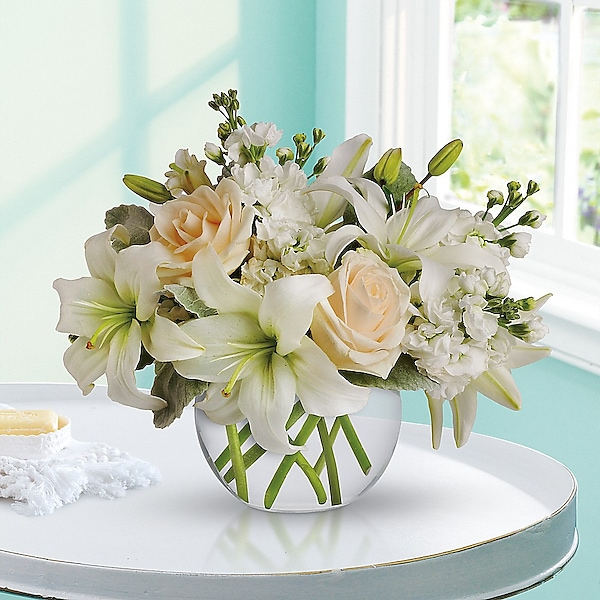
  • Lilies carry a heavy fragrance and significant pollen that drops everywhere.
  • Hyacinths release a strong perfume, overwhelming for small hospital rooms
  • Stargazer varieties drop pollen that stains bedding, clothing, and furniture
  • Jasmine produces a scent too intense for sensitive newborn noses

When ordering a new baby flower delivery, mention that the arrangement will be near a newborn. Quality florists automatically select appropriate blooms and avoid anything that could cause problems for the baby or parents.

Hospital Delivery Considerations

Sending flowers to a hospital involves different considerations than home delivery. Rooms are smaller, surfaces are limited, and arrangements compete with medical equipment for space. Knowing these limitations helps you choose gifts that actually work in real hospital environments.

What Works Best

  • Medium-sized designs fit windowsills and bedside tables without blocking access to monitors or IV stands.
  • Compact arrangements let parents enjoy beauty without constantly moving things around for nurses.
  • Plant alternatives like Layered Succulent Plant Garden eliminate water concerns while lasting months instead of days.

Timing Tips

Most hospitals accept deliveries during specific hours only, so calling ahead confirms their policy and prevents your gift from sitting in a lobby. Many families stay just 24-48 hours after delivery, meaning gifts sent too late arrive after everyone has already gone home. Sending flowers to their home address works better when timing feels uncertain, ensuring they arrive when the family can actually enjoy them.

Arrangements That Last Beyond the First Week

New parents barely have time to shower, let alone care for high-maintenance flowers. Selecting long-lasting blooms keeps your gift bringing joy well beyond delivery day, extending the thoughtfulness behind your gesture. Low-maintenance options ensure that same thoughtfulness does not turn into extra effort during a busy routine. Some of the options are:

  • Roses, chrysanthemums, and carnations can stay fresh for over a week with basic care
  • Orchids often last three weeks or more when properly cared for
  • Succulent arrangements require watering only every couple of weeks

These options show lasting beauty without demanding constant attention, making them ideal for busy new parents.

Delivery Options That Make Life Easier

How your flowers arrive matters almost as much as what you send. Reliable delivery takes stress away from your gift rather than adding to it.

Same-Day Delivery

When news arrives that a baby has been born, same-day service lets you respond immediately. Blooms arriving within hours show families you celebrated alongside them from the very first moment, carrying emotional weight that delayed gifts simply cannot match.

Scheduled Delivery

Sometimes waiting makes more sense than rushing. If the family has already received many gifts at the hospital, scheduling delivery for their first week home ensures your flowers arrive when they need brightness most. That transitional period from hospital to home often feels lonelier than expected, and unexpected flowers lift spirits beautifully during those quiet, exhausting days.

What to Write on the Card

Keep messages simple because exhausted parents lack energy for lengthy reading. Express joy and offer support without creating obligation or pressure.

Simple Messages That Work

  • “Welcome to the world, little one.”
  • “Celebrating this beautiful new chapter with you.”
  • “Sending love during these precious first days.”
  • “So happy for your growing family.”

Avoid phrases like “call me when you can” that create pressure during an already overwhelming time. Your flowers already communicate that you care, so your words simply need to reinforce that sentiment without demanding anything in return.

FAQs

What flowers are best for a new baby?

Roses, hydrangeas, orchids, and tulips work beautifully for newborns. These blooms offer gentle fragrance without overwhelming scent and produce minimal pollen. Avoid lilies and hyacinths that carry heavy perfume, inappropriate for sensitive babies.

Can you send flowers to a hospital for a new baby?

Yes, most hospitals accept flower deliveries during specific hours. Call ahead to confirm their policy and choose medium-sized arrangements fitting hospital room surfaces without blocking medical equipment access.

Final Thoughts

Selecting flowers for a new baby involves more than picking attractive blooms. A thoughtful arrangement takes into account the baby’s sensitivity, the parents’ daily routine, hospital guidelines, and the family’s style. Colors should feel calm and balanced, scents should remain gentle, and care requirements should stay simple for new routines.

Your flowers become part of those first days, often appearing in photos, brightening quiet moments, and carrying a message of care for the growing family. A thoughtful selection turns a simple gift into something meaningful and lasting.

Growing Wild Manhattan Beach designs new baby arrangements made for these moments. Their florists bring 30 years of experience selecting blooms suited for both hospital rooms and home settings. Same-day delivery helps your gift arrive while the moment still feels fresh, and every arrangement is supported by a freshness guarantee.

What Services Do Professional Plumbers in Lawton, OK, Offer?

When something goes wrong with your plumbing, it quickly becomes stressful. Water leaks, clogged drains, or no hot water can disrupt your whole day. That is where professional plumbers in Lawton, OK come in. Expert plumbers provide a wide variety of essential solutions for every property. They handle general plumbing and complex pipe repairs to stop leaks or low pressure. 

Teams also manage fixture installations and professional drain cleaning to prevent messy backups. Specialized leak detection finds hidden water issues before they cause damage. Additionally, they offer 24/7 emergency support and gas line services. Finally, routine preventive maintenance ensures systems stay functional.

Services Provided by Plumbing Experts in Lawton, OK

Here are the key services professional plumbers offer.

  1. General Plumbing Services

Expert teams handle the core systems that keep your property running. They focus on the big pipes you usually do not see. This includes the installation and repair of water, sewer, and gas lines. If your system is old, they provide pipe replacement and modern system upgrades. Routine plumbing maintenance is also a big part of what they do to prevent sudden issues.

  1. Plumbing Repair Services

Repairs are one of the most requested services. And honestly, who has not dealt with a leak at some point?

Plumbers fix issues like:

  • Leaks in pipes or fixtures
  • Burst pipes during cold weather
  • Broken valves and worn-out parts

They also address low water pressure and blockages. This often involves checking the pipes step by step. First, they inspect the problem. Then they locate the exact cause. And finally, they fix or replace the damaged part.

  1. Fixture Installation Services

Plumbers deal with the installation of faucets, toilets, showers, and sinks. They assist with kitchen and bathroom remodeling, too.

Here is how they usually do it:

  • Step 1: Remove the old fixture
  • Step 2: Prepare the connection points
  • Step 3: Install the new fixture
  • Step 4: Test for leaks and proper flow

This ensures proper fit and function. For example, a poorly installed faucet can leak within days.

  1. Drain Cleaning Services

Clogs cause a significant headache for any family. Removal of blockages and clogs of the drains and pipes is done with special tools by the professionals. This assists in the avoidance of blocked and tedious drainage problems leading to unpleasant smells.

  • First, the plumber inspects the drain with a camera.
  • Then, they choose the right snake or jetter.
  • They break up the thick debris.
  • They flush the line with clean water.
  • Finally, they test the sink to ensure it drains fast.
  1. Leak Detection and Repair

Hidden leaks are the worst since they cannot be observed. Leaks are concealed in areas behind walls or deep in the ground. Plumbing experts are good at detecting them. They employ highly sophisticated equipment that can accurately detect without excavating your whole yard. This will be critical in avoiding water wastage and excess utility bills.

  1. Water, Sewer, and Gas Line Services

These are the most technical jobs in the industry. Plumbers manage the installation and repair of main water supply lines. They also handle sewer line maintenance and difficult blockage removal.

  • Installing new gas lines for stoves.
  • Repairing cracked sewer pipes.
  • Replacing old water mains.
  • Cleaning out tree roots.
  • Testing gas pressure for safety.
  1. Emergency Plumbing Services (24/7)

Some problems just cannot wait. Emergency plumbers are available 24/7. They respond quickly to urgent issues like:

  • Burst pipes
  • Overflowing toilets
  • Severe leaks

Their goal is to minimize damage and restore normal function fast.

  1. Preventive Maintenance and Inspections

Small leakages are better identified early before a flood. Preventive maintenance involves a regular inspection by a qualified expert. A plumber comes to your home once or twice a year. They look at all the pipes, fittings, and water heater connections they can access. They seek minor problems such as a corroded valve which can stop functioning soon or a slow drip behind the toilet. Then fix those tiny issues early before they become huge problems. This simple habit extends the lifespan of your entire plumbing system by years. Many companies offer affordable maintenance plans. You pay a small fee each month or each year.

  1. Residential, Commercial, and Industrial Plumbing

Plumbing needs are different for every property. A home is not the same as a factory.

AspectResidential PlumbingCommercial PlumbingIndustrial Plumbing
Property TypeHomes, apartmentsOffices, storesFactories, plants
System SizeSmallMediumLarge
UsageLowModerate to highHeavy, continuous
ServicesRepairs, fixtures, drainsMaintenance, restrooms, pipingComplex systems, machinery
EquipmentBasic fixturesMultiple unitsSpecialized equipment
MaintenanceOccasionalRegularStrict schedules
RegulationsStandard codesStricter rulesVery strict standards
ScalabilityLimitedFlexibleHighly scalable

Conclusion

Professional plumbers in Lawton, OK offer much more than basic repairs. They are also skilled and careful in installations, maintenance and emergency services. They handle all requirements, from repairing a minor leak to installing a complete system. And their labor helps guard your property. Regular maintenance also helps keep your plumbing system in excellent condition over the years. It is always better to act early than wait for a bigger problem to appear. In the company of a professional plumber, you will feel far more comfortable and safe.

The Trust Funding Problem: Why 40% of Trusts Fail to Do What They Promise

There’s a statistic I’ve heard quoted in estate planning conferences for years: roughly 40% of revocable living trusts fail to do what they were designed to do because of improper funding. I don’t know where that number originally came from or how rigorously it was calculated, but after a career of reviewing trust-based estate plans, I can tell you it tracks with my experience.

The trust document itself is usually fine. The attorney did their job drafting it. The problem is what happens — or doesn’t happen — after the document is signed.

What “Funding” Means

A trust is essentially an empty container. The trust document creates the rules for how assets inside the container will be managed and distributed. But if you don’t actually put your assets into the container, the rules don’t apply to those assets.

Funding means retitling your assets so they’re owned by the trust instead of owned by you individually. Your house deed changes from “John Smith” to “John Smith, Trustee of the John Smith Revocable Trust dated [date].” Your bank accounts get retitled similarly. Your investment accounts. Your business interests. Your vehicles, if the state allows.

Every asset you want to pass through the trust needs to be funded. Every asset you forget to fund will still go through probate — which is the exact thing the trust was supposed to avoid.

Why Funding Gets Skipped

In a typical trust engagement, the attorney drafts the documents and charges for the drafting. Funding requires the client to:

Contact their mortgage company to verify the trust can hold the home. Contact their bank to retitle accounts. Contact their investment advisor to retitle brokerage accounts. Sign new deeds and have them recorded. Update beneficiary designations on retirement accounts (though these should generally name individuals or trusts as contingent beneficiaries, not the trust itself, for tax reasons).

This is real work, and it takes follow-up. Some attorneys include funding assistance in their fee. Many don’t. Many clients take the trust documents home, put them in a drawer, and never complete the funding process.

The Result

When the client dies, the successor trustee discovers that the house is still titled in the deceased’s name, the main bank account is still in their name, the investment accounts are still in their name. The trust is essentially empty. Everything has to go through probate anyway.

The family paid $3,500 for a trust that didn’t avoid a single probate filing. That’s the 40% failure rate in practice.

The Pour-Over Will Solution (Sort Of)

Most trust-based estate plans include a “pour-over will” as a backup. This is a simple will that says “anything I own at my death that isn’t already in my trust should go into my trust.” It’s a safety net for assets that were forgotten.

Here’s the problem: the pour-over will still has to be probated. The assets still go through probate court, still take 5-12 months to clear, still cost the estate attorney fees. The pour-over will doesn’t avoid probate — it just directs whatever survives probate into the trust afterward. So you end up doing probate for the unfunded assets AND have the administrative cost of the trust.

Worst of both worlds.

Getting It Right

If you’re going to use a trust, funding it properly is non-negotiable. Here’s the checklist I give clients:

Within 30 days of signing the trust: Execute and record new deeds for all real estate into the trust’s name. Retitle all primary bank accounts into the trust. Retitle all taxable investment accounts into the trust.

Within 60 days: Update beneficiary designations on life insurance policies (typically name the trust as beneficiary, or name individuals directly depending on tax planning). Update business entity ownership if applicable. Transfer any other significant assets (boats, collectibles, etc.) as appropriate.

For retirement accounts (401(k)s, IRAs): Usually do NOT retitle these into the trust — this can accelerate income tax. Instead, confirm named beneficiaries are individuals (spouse, children, etc.) with the trust as a backup contingent beneficiary only if specifically needed.

For vehicles: In Michigan and most states, leave these in individual ownership. The transfer-on-death provisions or affidavit procedures at the Secretary of State are simpler than trust retitling.

Ongoing Maintenance

Funding isn’t a one-time event. As you acquire new assets throughout your life, they need to be titled in the trust from the start. Bought a new rental property? Title it in the trust’s name, not your individual name. Opened a new investment account? Title it in the trust. Started a new business? Consider having the trust be the owner of the business interest.

Many trust clients do the initial funding well and then forget about it. Ten years later, 60% of their assets are outside the trust because they acquired them in their individual name. The same problem, just delayed.

How to Check If Your Trust Is Actually Working

Do this exercise: take a pen and paper, list every major asset you own, and write next to each one how it’s currently titled. If it’s not titled in the trust’s name (or, for retirement accounts, with proper beneficiary designations), your trust isn’t protecting that asset from probate.

If this exercise reveals gaps, you have three options. Fix them by funding the assets into the trust now. Accept that those assets will go through probate (and maybe simplify the trust accordingly). Or consult your estate planning attorney about alternative strategies for those specific assets.

The Honest Take on Trusts

Considering the full pros and cons of a trust, funding is the hidden “con” that most sales pitches skip. The trust is only as good as its funding. If you’re not willing to do the administrative work to fund it properly — or work with an attorney who handles funding for you — you’re better off with a simpler solution.

The trust document is the start. The funding is the whole game.

How to Improve Dispatch Management Software for Your Courier Business

Dispatch management is a critical component of any courier business, as it directly impacts the efficiency of delivery operations, customer satisfaction, and overall profitability. With increasing demand for faster, more accurate deliveries, businesses need advanced dispatch management software that can optimize processes, streamline communication, and reduce operational costs. Improving your dispatch management software can help you meet these challenges and take your courier business to the next level.

Key Software Systems provides advanced solutions, like Xcelerator, designed to enhance dispatch management and streamline operations for courier businesses. In this post, we’ll explore how you can improve dispatch management software to increase efficiency, reduce delays, and provide better service to your customers.

1. Automate the Dispatch Process

Manual dispatching can be time-consuming and prone to errors, especially as the volume of deliveries increases. Automating the dispatch process is one of the most effective ways to improve dispatch management software. Automation ensures that deliveries are assigned to the right driver, with the most efficient routes, based on real-time data.

Key Software’s Xcelerator automates the dispatch process, allowing businesses to assign deliveries quickly and accurately. By using real-time data to assign tasks based on driver availability, proximity, and delivery priority, businesses can reduce manual labor, minimize human errors, and improve overall efficiency.

2. Implement Real-Time Tracking and Monitoring

Real-time tracking is essential for managing dispatch operations effectively. With real-time tracking, businesses can monitor the status of deliveries, identify potential delays, and make adjustments as necessary. Real-time monitoring also provides valuable insights into driver performance, route efficiency, and delivery progress.

With Key Software’s Xcelerator, businesses can track deliveries and drivers in real-time, allowing dispatchers to stay on top of operations. This visibility helps businesses address potential issues, such as delays or route deviations, before they become problems. By keeping a close eye on delivery progress, businesses can ensure that deliveries are completed on time and customers are kept satisfied.

3. Optimize Routes for Efficiency

Optimizing delivery routes is crucial for improving efficiency and reducing operational costs. Without route optimization, drivers may take inefficient paths, resulting in longer travel times, higher fuel consumption, and delayed deliveries. Dispatch management software with route optimization features can automatically calculate the best routes based on real-time traffic, weather conditions, and delivery windows.

Key Software’s Xcelerator includes dynamic route optimization that continuously adjusts routes in real-time, ensuring that drivers take the fastest and most cost-effective routes. This feature reduces fuel consumption, cuts delivery times, and maximizes driver productivity. By optimizing routes, businesses can improve efficiency and reduce costs, ultimately improving profitability.

4. Improve Communication Between Dispatchers and Drivers

Effective communication between dispatchers and drivers is essential for successful dispatch management. In traditional systems, communication often happens via phone calls or radios, which can lead to delays, misunderstandings, and missed opportunities. Modern dispatch management software enables seamless communication by providing dispatchers and drivers with real-time updates, delivery instructions, and routing information directly on their mobile devices.

Key Software’s Xcelerator integrates with mobile devices, allowing dispatchers to send real-time updates and delivery instructions directly to drivers. Drivers can also communicate with dispatchers in case of any issues or delays, ensuring that both parties are always informed. This seamless communication ensures that deliveries are completed efficiently and on time, while also improving accountability.

5. Leverage Data Analytics for Decision Making

Data analytics plays a key role in improving dispatch management. By analyzing delivery performance, driver behavior, and operational efficiency, businesses can identify areas for improvement and make data-driven decisions to optimize their operations. Dispatch management software that includes reporting and analytics features enables businesses to track key performance indicators (KPIs) and gain valuable insights into their delivery operations.

Key Software’s Xcelerator platform provides businesses with detailed reports and analytics, allowing them to monitor delivery performance, track driver behavior, and assess customer satisfaction. By using this data, businesses can make informed decisions about route optimization, driver performance, and resource allocation, leading to more efficient dispatch operations.

6. Enable Scalability for Growth

As your courier business grows, the complexity of managing dispatch operations increases. A scalable dispatch management system is essential for handling higher volumes of deliveries, managing more drivers, and expanding service areas without sacrificing service quality or operational efficiency. Scalable dispatch management software can help businesses accommodate growth and maintain smooth operations as they expand.

Key Software’s Xcelerator is designed to scale with your business, offering flexible features that can handle an increasing number of deliveries, drivers, and customers. Whether you’re expanding your fleet, covering more regions, or increasing delivery volume, Xcelerator can handle the increased demand without compromising performance or efficiency.

7. Improve Customer Experience and Satisfaction

Customer satisfaction is directly tied to the reliability and accuracy of deliveries. Dispatch management software helps businesses improve customer satisfaction by ensuring that deliveries are made on time, drivers take the most efficient routes, and customers are informed of delivery progress. Automated notifications and real-time tracking give customers visibility into the status of their deliveries, improving transparency and reducing customer service inquiries.

With Key Software’s Xcelerator, businesses can offer customers live tracking, accurate estimated delivery times (ETAs), and automated notifications about delivery status. By improving communication and providing real-time updates, businesses can enhance the customer experience, build trust, and increase customer loyalty.

Contact Us

If you’re ready to improve your dispatch management software and streamline your operations, Key Software Systems is here to help. Contact us today to learn more about how our solutions can enhance your delivery management and support your business growth:

  • Address: 5100 Belmar Blvd, Farmingdale, NJ 07727
  • Email: [email protected]
  • Phone: (732) 409-6068
  • Business Hours: Monday-Friday: 9 am to 6 pm ET

Conclusion

Improving your dispatch management software is essential for enhancing operational efficiency, reducing costs, and providing better service to customers. By automating dispatch, optimizing routes, and improving communication, businesses can streamline their delivery operations and improve the customer experience. Key Software’s Xcelerator platform provides the tools needed to optimize dispatch management, improve efficiency, and scale your business effectively. With the right dispatch management software, businesses can stay competitive and deliver exceptional service to their customers.