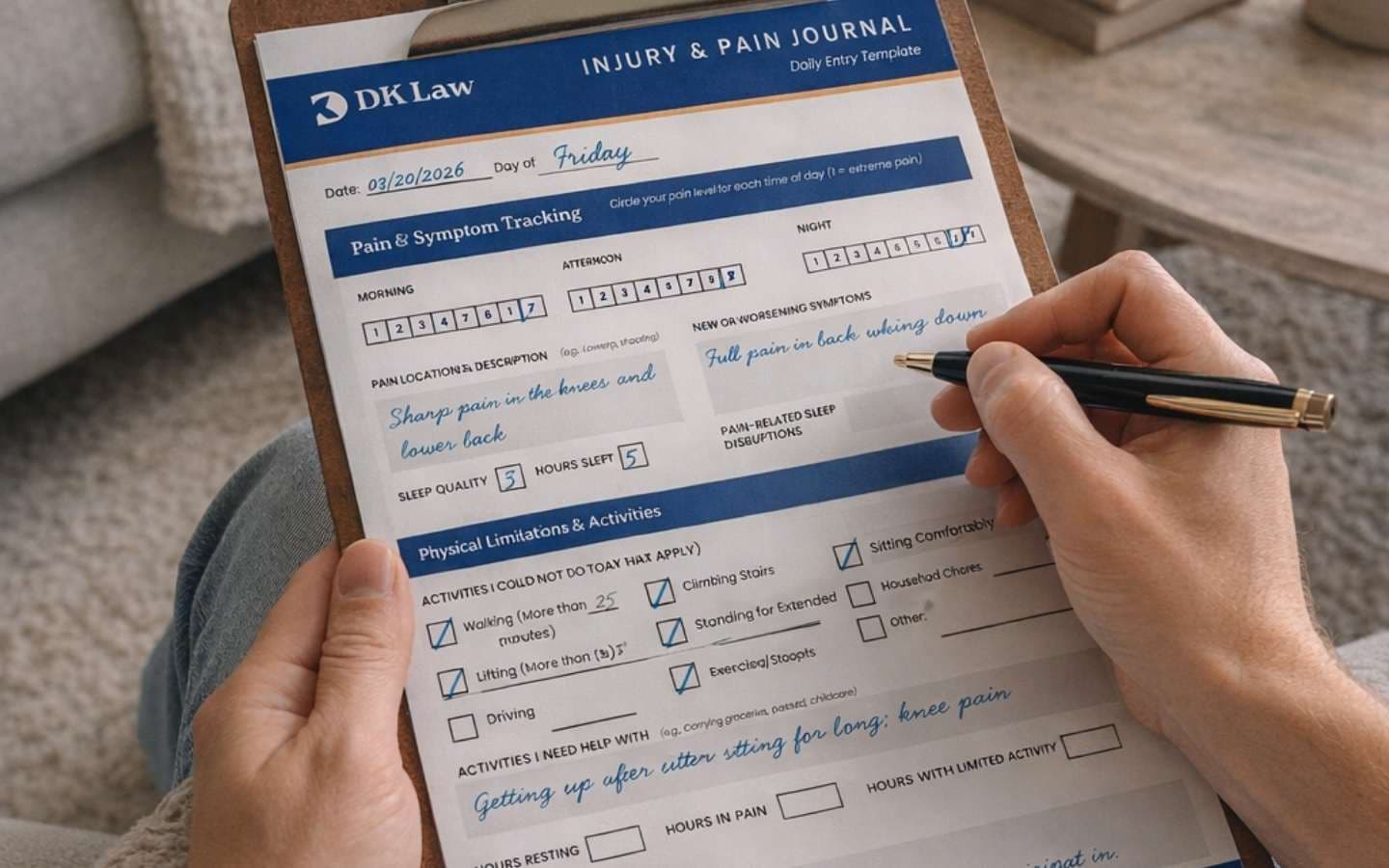
Pain and suffering damages concern losses that do not arrive with a simple invoice. Physical discomfort, emotional distress, inconvenience, and reduced enjoyment of ordinary activities may be relevant in some personal injury cases, but their treatment differs by jurisdiction.
Consistent medical records and factual descriptions of daily limitations can provide more useful context than broad statements that an injury “changed everything.”
Describe Specific Changes in Daily Life
Record concrete limitations. Perhaps standing long enough to cook became difficult, sleep was interrupted, driving caused discomfort, or a recreational activity had to stop temporarily.
Specific descriptions create a clearer timeline than repeatedly assigning pain a dramatic adjective. Keep entries accurate and avoid turning a personal journal into an attempt to predict what a court or insurer will award.
Cornell’s Legal Information Institute defines pain and suffering as physical discomfort and emotional distress that may constitute noneconomic damages. It also notes that concepts such as inconvenience and emotional trauma may fall within the term.
Cornell LII: Pain and Suffering
Keep Treatment Records Consistent With the Timeline
Medical appointments, therapy notes, prescriptions, diagnostic records, and treatment recommendations can help establish what was reported and when.
People exploring accident-related topics may see property injury information among the many materials available online. Those resources are not substitutes for the actual treatment records associated with a specific claim.
Record Improvement as Well as Difficult Days
A credible timeline should show changes in both directions. If mobility improves or medication is no longer needed, recording that improvement helps preserve an accurate account rather than an artificially one-sided narrative.
| Daily Effect | Useful Record | Example Detail |
|---|---|---|
| Sleep disruption | Journal or medical note | Hours interrupted |
| Limited movement | Treatment record | Activity restricted |
| Missed activity | Calendar entry | Event not attended |
| Emotional effects | Clinical documentation | Reported symptoms |
Separate Noneconomic Loss From Financial Loss
Medical bills and lost income can often be assigned a dollar figure from records. Pain and suffering does not work the same way.
Someone browsing legal claim publications may encounter formulas or generalized settlement discussions, but no universal online multiplier determines every claim. The applicable law, severity, duration, credibility of evidence, and individual circumstances can all matter.
Avoid Exaggeration and Unsupported Assumptions
Social media posts, surveillance, medical records, work records, and prior statements may be compared with what a claimant later reports. That makes consistency important.
Before relying on general legal Q&A material, remember that an online explanation cannot evaluate the full evidentiary record. Statements about limitations should remain factual and proportionate to what actually occurred.
What People Often Misunderstand
Pain does not automatically translate into a fixed dollar amount. Two people with similar diagnoses may experience different limitations, treatment courses, recoveries, and legal outcomes.
Another mistake is believing that more dramatic language automatically strengthens a claim. Inconsistency can create credibility problems. Detailed, ordinary facts about sleep, mobility, work, treatment, family responsibilities, and activities are generally more informative than exaggerated descriptions.
When Legal Guidance May Matter
Consider legal advice when injuries are significant, symptoms persist, a permanent limitation is alleged, the insurer disputes causation, or a settlement requires releasing future claims.
State law can affect available categories of damages, evidentiary requirements, limitations, and deadlines. A lawyer licensed in the relevant jurisdiction can apply those rules to the specific facts.
Frequently Asked Questions
Is a pain journal useful in an injury claim?
It can help create a contemporaneous record of symptoms, limitations, treatment, and improvement. Entries should remain factual and consistent with other available evidence.
Is emotional distress the same as pain and suffering?
The terms can overlap, but their legal treatment varies. Applicable law may distinguish physical pain, emotional distress, inconvenience, and other forms of noneconomic harm.
Do I need medical treatment to claim pain and suffering?
Requirements differ by claim and jurisdiction. Medical documentation can provide important evidence, but whether a particular type of treatment is legally required cannot be answered universally.
Preserve the Everyday Details
The strongest record of noneconomic harm is usually built over time, not reconstructed immediately before negotiation. Keep treatment documents and factual notes about meaningful changes in ordinary activities. If the claimed effects are serious or long-lasting, get jurisdiction-specific legal advice before assuming how those losses should be valued.
This article is for general informational purposes and is not a substitute for legal advice from a qualified attorney in your jurisdiction.