
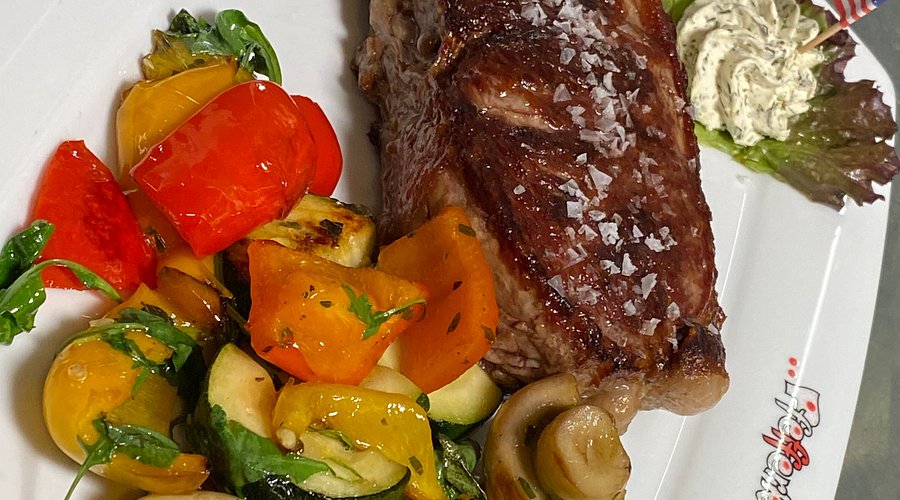
Best beef steakhouse restaurants operating in Dortmund
I my 15 years managing hospitality operations, I’ve learned that “best” is a moving target. It’s not just about the cut of meat; it’s about the operational grind, the consistency of the pass, and the margins that keep the lights on. When we talk about the best beef steakhouse restaurants operating in Dortmund, we aren’t just looking for a good sear—we’re looking for businesses that have survived supply chain crunches and shifting consumer habits. I’ve seen plenty of concepts flash and burn out because they ignored the fundamentals. The places listed below manage to balance the delicate equation of quality, service, and overhead in a way that commands respect.
Pfefferkorn: The Reliability of a Heritage Brand
I’ve been thinking about what you mentioned regarding brand longevity versus flash-in-the-pan trends. Pfefferkorn is the operational equivalent of a blue-chip stock. Established in the early 80s, they understand that scaling requires standardization without sacrificing soul—a lesson many new restaurateurs learn the hard way.
The Hoher Wall location feels like a masterclass in traditional steakhouse management. They source Prime Nebraska and dry-aged Irish beef, but the real story here is consistency. You don’t survive four decades in this industry by accident. It reminds me of the automotive sector; sometimes the smartest money isn’t on the newest model, but on the proven reliability of top used cars that hold their value over time. Pfefferkorn delivers that same durable quality. You know exactly what you’re getting, and in a volatile market, that predictability is an asset.
Hohoffs 800°: The Specialized Tech Play
Every few years, a piece of technology disrupts the kitchen workflow. Right now, it’s the 800-degree Montague grill. Hohoffs “The Farmhouse” isn’t just a restaurant; it’s a facility built around this specific thermal technology. The “Farmhouse” aesthetic—using Canadian timber—is a smart capex investment because it creates an immersive destination that justifies a higher ticket price.
From a logistical standpoint, their location strategy is fascinating. They aren’t in the city center foot-traffic mix; they are a destination. It reflects a broader consumer shift we’re seeing across industries. Just as customers now comfortably buy electric cars online without needing a physical showroom on every corner, diners are willing to travel for a specific, high-quality experience. They’ve proven that if the product (the 800° crust) is superior, the location becomes secondary.
EMIL Grill & Meer: The Hybrid Business Model
I once worked with a client who insisted on sticking to a single vertical, refusing to diversify. They went under in 2019. EMIL Grill & Meer takes the opposite approach, utilizing a “surf and turf” model that hedges against commodity price fluctuations in the beef market by leaning into high-margin seafood.
Located in the historic Auerbachkeller, the operation creates a bridge between the primal steakhouse vibe and fine dining. It’s a strategic mix. We see this mirrored in the auto industry, where the push for the best hybrid cars combines the range of gas with the efficiency of electric. Similarly, EMIL combines the raw power of a steakhouse with the finesse of a seafood bar. This hybridity expands their total addressable market, attracting both the hardcore carnivore and the pescatarian diner in the same booking.
Golden Horn: The Service Efficiency Engine
The data tells us that 70% of negative reviews stem from service failures, not food quality. Golden Horn Steakhouse, with its near-perfect ratings, operates with a front-of-house efficiency that is rare in this region. Watching their floor team is like watching a well-oiled logistics hub; there is zero wasted movement.
Operational maintenance is the unsexy side of this business. Whether you are running a kitchen or a delivery fleet, if you are constantly scrambling for local car parts to fix breakdowns, you are losing money. Golden Horn’s “machinery”—their staff training and table turnover protocols—appears flawless. They don’t seem to suffer from the staffing churn that plagues the rest of the sector, suggesting their internal culture is as premium as their saddle of lamb.
The ASH: Scaling Volume Without Losing Quality
Scaling a concept is where most operators fail. The ASH (American Steak House) attempts to industrialize the steakhouse experience without it feeling like a cafeteria. It’s a volume play, plain and simple. The challenge here is maintaining the integrity of the “best beef steakhouse restaurants operating in Dortmund” label while serving hundreds of covers a night.
Based on current diner rankings, they manage to keep customer sentiment high despite the massive throughput. They utilize a decentralized kitchen model that allows for speed, which is critical when you’re turning tables three times a night. It’s less about the romance of the chef and more about the precision of the expo line. For a business owner, their model is the one to study if you want to understand maximize revenue per square foot.
Conclusion
The best beef steakhouse restaurants operating in Dortmund share one trait: they treat their restaurant as a manufacturing plant for hospitality. Whether it’s Pfefferkorn’s legacy systems, Hohoffs’ thermal tech, or Golden Horn’s service logistics, these operators understand that passion doesn’t pay the invoices—execution does. If you’re looking for a steak in this city, you aren’t just buying a meal; you’re witnessing a successful business case study in action.
Frequently Asked Questions
Do these steakhouses require reservations weeks in advance?
In my experience, yes. For Friday and Saturday nights at prime locations like Hohoffs or EMIL, you should book at least 2-3 weeks out. Walk-ins are technically possible at larger venues like The ASH, but from a planning perspective, relying on a walk-in slot is a high-risk strategy.
What is the dress code for top Dortmund steakhouses?
Most operate on a “smart casual” baseline. You don’t need a full suit, but gym wear is a no-go. Think of it as business casual; a collared shirt or a smart blouse fits in perfectly. Places like Golden Horn tend to have a slightly more upscale clientele in the evenings.
Are there vegetarian options at these beef-focused restaurants?
Surprisingly, yes. Operationally, it makes sense to eliminate the “veto vote” in a group. Most of these venues, especially EMIL and Pfefferkorn, offer robust non-meat sides and at least one or two dedicated vegetarian mains, though the kitchen’s primary workflow is obviously designed around the grill.
How does the pricing compare to other German cities?
Dortmund offers better value per ounce than Munich or Frankfurt. You are looking at a check average of €50-€80 per head for a full dinner with wine. The rent overhead in the Ruhr region is lower, allowing operators to put a bit more margin back into the quality of the beef.
Is parking generally available at these locations?
It varies wildly. Hohoffs “The Farmhouse” has decent dedicated parking due to its location. However, for city-center spots like Pfefferkorn or Golden Horn, you are at the mercy of public garages. I always advise factoring in an extra 15 minutes for the “last mile” logistics of parking in the city core.